Introduction: Managing Cross-Border Returns of Technology Equipment
Nowadays, many of businesses ship networking hardware, servers, laptops, and storage devices to different countries. These products might require to be returned for servicing, exchanges, upgrades, insurance problems, or maintenance reasons. Handling these returns across borders is easy because companies must follow to multiple customs laws, prepare proper documents, & handle shipping processes correctly. Any mistakes in documents or compliance may cause delays, extra costs, or shipment problems. A secure cross-border return process helps companies to transport technology equipment between countries safely and efficiently. Businesses can reduce risks and handle equipment returns more efficiently by using proper logistics planning, customs support, and reverse logistics services.
What Are Cross-Border Returns for Technology Equipment?
Cross-border returns of technology equipment happens when a company delivers IT goods back from one country to another for repair, exchange, testing, upgrades, or other service needs. This technique is widely used for servers, laptops, networking devices, and other company technology equipment. Returning equipment, unlike regular shipments, requires careful handling because companies must follow to customs laws, prepare proper documents, & follow import and export regulations. Proper planning helps to avoid clearance issues, shipping delays, and extra costs. IT equipment reverse logistics handles the shipment of technology devices back through the supply chain. Businesses may trace returned goods, handle repairs, & decide whether equipment should be repaired, upgraded, or replaced. Effective global – return shipping and equipment lifecycle handling help companies to maintain control over their technical resources while supporting smooth international trade. A well-managed return process improves efficiency & reduces difficulties during cross-border movement.
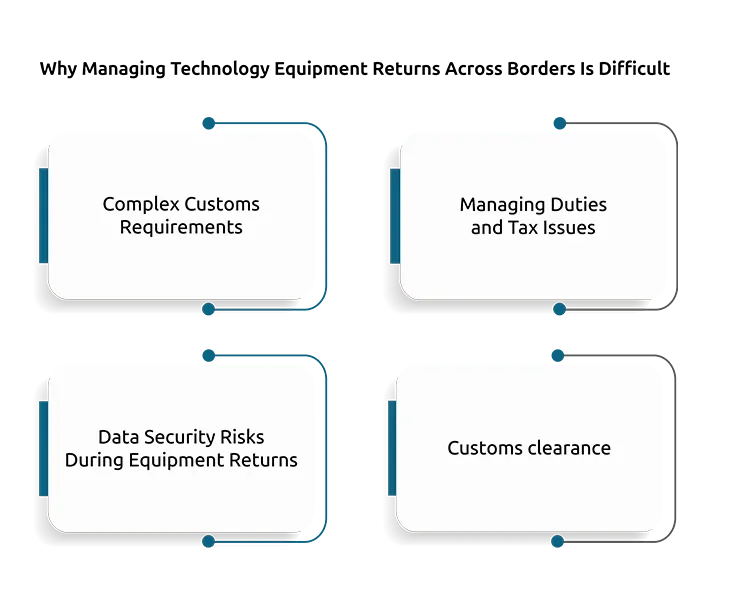
Why Managing Technology Equipment Returns Across Borders Is Difficult
Returning technical equipment across countries can be difficult because companies must complete in many steps at the same time. Returning equipment, like regular shipments, requires careful planning, correct documents, and compliance with different countries rules. Small mistakes can cause delays, extra costs, or problems during the return process.
Complex Customs Requirements
Returned equipment requires proper customs documents & must follow to local import regulations. Customs clearance can be delayed due to incorrect documents or missing data, especially for repaired, replaced, or used equipment.
Managing Duties and Tax Issues
Businesses can face extra costs while returning equipment. Import tariffs and tax compliance can be handled more effectively with proper classification, correct documents, & strong trade compliance processes.
Data Security Risks During Equipment Returns
Sensitive business data may be stored on technology equipment. Companies should have secure data cleaning methods before shipping. Secure equipment returns, data protection, & reliable IT asset handling can help to makes sure the security of data.
Common Mistakes in Cross-Border Technology Equipment Returns
Many companies make small mistakes when returning technology equipment to another country, which may cause delays, increased costs, & customs issues. One frequent difficulty is the use of incorrect or missing customs documents, such as invoices, return forms, product details, or serial codes. This can cause delays in international shipping compliance & customs clearance. Another mistake is treating returned equipment as if it was new. Technology equipment returned for repair, replacement, or warranty support may require extra documents and a proper reverse logistics process. Good return shipping management makes sure that the equipment passes smoothly through the return process. Businesses can also overlook local import controls, even with the fact that every country has its own rules for returned technology equipment. Following these standards and adhering to global trade compliance helps to avoid extra taxes, shipment delays, & other avoidable issues.
Role of Importer of Record (IOR) in Technology Equipment Returns
An Importer of Record (IOR) takes responsibility for tracking cross-border returns of technology equipment. When a company wants to return equipment to a country without a local presence or legal entity, Importer of Record services can handle the legal import responsibilities. The IOR handles all required documents, helps with customs clearance, & makes sure the shipment follows with local customs regulations. This simplifies the return process and reduces the risk of delays or legal difficulties. An IOR provides reliable support for businesses involved in global equipment deployment by safely & efficiently restoring technological equipment across international borders.
How Reverse Logistics Supports Technology Equipment Management
IT reverse logistics allows businesses to ship technology equipment back through the supply chain in a planned & organized way. It covers the return of goods for repairs, exchange, upgrades, reuse, or correct disposal. It also helps businesses review returned equipment to identify whether it may be repaired, refurbished, reused, or destroyed. A good reverse logistics process improves equipment lifecycle handling, reduces waste, reduces costs, & helps companies to make greater use of their technology assets while keeping global operations working smoothly.
How Companies Can Reduce Costs and Delays in Global Equipment Returns
Companies may reduce costs and avoid delays by preparing equipment returns before shipping. Preparing the required documents before time and applying the proper HS code classification allows customs to process the shipment faster. Choosing the appropriate transport method based on the kind and value of the equipment improves delivery time and reduces extra costs. Working with skilled compliance and logistics experts makes sure that shipments follow to local standards and move smoothly across borders. Using low-cost reverse logistics and reliable cross-border shipping solutions allows businesses to conduct global equipment returns faster and more efficiently.
Conclusion
Cross-border returns of technology equipment are much easier to handle with careful planning and support. Correct documents, customs compliance, secure handling, & effective reverse logistics all help businesses avoid delays and costs. Companies can safely return equipment, protect their technology products, and keep their global operations running smoothly if they follow the proper processes.
Did you know
Customs authorities estimate that over 90% of global trade moves under the Harmonized System (HS) for product classification. Using the correct HS code helps speed up customs clearance for cross-border technology equipment returns.
FAQ
Why are cross-border returns important for technology equipment?
Cross-border returns allow businesses to return technology equipment for repairs, replacements, upgrades, or warranty support & maintain global operations.
Why is reverse logistics important for equipment returns?
Reverse logistics is the process of planning the return of equipment for repairs, replacements, refurbishment, recycling, or safe disposal.
Why is data protection important during equipment returns?
Because technology equipment may contain business details, sensitive data should be removed & protected just before shipment.
Which role does an Importer of Record (IOR) play in equipment returns?
An Importer of Record (IOR) handles import regulations, supports customs compliance, & helps businesses return equipment even if they do not have a legal entity.
Which businesses benefit from cross-border technology equipment returns?
Companies in IT, data centers, healthcare, telecom, & other industries that use technology equipment can benefit from a well-handled return process.