Introduction
As growth in artificial intelligence, cloud computing, & digital services continues to develop, businesses are expanding data centers across many countries. This requires for changing servers, storage systems, networking equipment, & other important IT hardware safely & on time. Global deployments can be delayed by customs clearance, import laws & regulations, shipping issues, or poor connection between different teams.
These delays cause increased costs, slow down project completion, & postpone the launch of new services. By planning, preparing the correct paperwork, & connecting with an experienced logistics provider, businesses can minimize risks & ensure their data center equipment reaches its location on time, keeping development projects running easily.
Why Timely Data Center Deployment Matters
Timely data center development is important to capture market share, meet surging demands for GenAI & cloud workloads, & maintain a competitive edge. Speed-to-market directly translates to revenue acceleration, while delays risk reduce value in rapidly evolving compute landscapes.
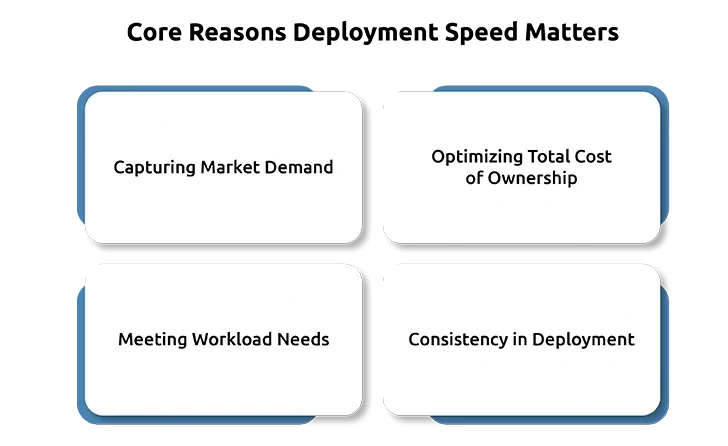
Core Reasons Deployment Speed Matters
Capturing Market Demand: Rapid rollout allows operators to seize cloud and Artificial Intelligence (AI) investments while the market is hot. Speed-to-market is critical in dictating computational leadership and geopolitical edge.
Optimizing Total Cost of Ownership: Efficient deployment helps keep initial capital expenditures in check and ensures infrastructure is generating revenue sooner.
Meeting Workload Needs: New applications, such as machine learning and high-definition content delivery, generate massive data requirements that require instant scalable compute.
Consistency in Deployment: Deploying globally on schedule—often utilizing “tiger teams” and prefabricated solutions—reduces learning curves and the risk of future downtime.
Why Accurate Documentation Prevents Data Center Deployment Delays
Data centres must start on time, so their necessary equipment must be imported without experiencing delays. Importing goods needs the preparation of many documents, including commercial invoices, packing lists, certificates of origin & product compliance certificates. All documents must be written and given to customs properly to ensure the process runs smoothly.
Clear and prompt documentation helps to limit errors, incomplete paperwork, and misunderstandings with customs personnel. Businesses can achieve quicker clearance and save on costs if they simplify their documentation process. A good approach allows businesses to speed up the delivery of vital equipment. Hence, their data centres begin operation as planned.
A well-organized system for documentation makes it easier to complete imports, and businesses can avoid unexpected penalties if everything is done correctly. Suppose the documentation is completed promptly and with no errors. In that case, the company can avoid problems with regulators and keep costs down. Effective documentation is necessary for the smooth deployment of data centers, confirming on-time import and agreement with global trade guidelines. Using blockchain in the supply chain increases clarity and security in document verification, reducing issues and delays. Working with experts who understand the Exporter of Record service confirms that all import responsibilities, including regulatory approval and customs clearance, are handled accurately. Also, combining freight logistics services supports effective logistics and coordination, allowing organizations to achieve faster data center setup and improved project ROI.
Plan International Logistics in Advance
Planning your logistics can help prevent delays in global data center projects. Before shipping any equipment, make sure transportation, customs clearance, storage, & final delivery are properly handled. It is also important to select the correct shipping method & have a backup plan in case of unexpected delays.
Keeping in touch with suppliers, freight partners, & installation teams helps everyone stay connected & work together. Tracking shipments throughout the journey also makes it easier to spot problems early & solve them before they affect the project schedule.

Conclusion
Avoiding delays in global data center projects starts with good management. Developing the right import paperwork, following customs laws & rules, & organizing transportation in advance can help keep every stage of the project on track. These steps minimize delays, avoid extra costs, & ensure that important IT equipment arrives safely & on time.
Working with an experienced logistics partner also makes the process easier. One Union Solutions supports businesses with customs, global shipping, & complete logistics services, helping data center equipment reach its final location on time & easily so projects can move forward without any unnecessary delays.
Did you know?
Nearly half of all U.S. data centers planned for 2026 have been canceled or delayed, according to Bloomberg reporting confirmed by multiple industry trackers. Out of 12 GW of AI data center capacity announced for this year, only about 5 GW is under active construction.
FAQ
1. What are the biggest reasons for delays in international data center deployments?
The most common causes include incomplete customs documentation, incorrect HS codes, regulatory compliance issues, shipping disruptions, port congestion, and poor coordination between suppliers, logistics providers, and installation teams. Addressing these issues early can significantly reduce deployment delays.
2. How can companies speed up customs clearance for data center equipment?
Companies can speed up customs clearance by preparing accurate documentation, using the correct HS classifications, obtaining required import permits, and working with experienced customs brokers or Importer/Exporter of Record (IOR/EOR) service providers to ensure compliance with local regulations.
3. Why is logistics planning important for international data center projects?
Planning logistics in advance helps coordinate transportation, customs clearance, warehousing, and final-mile delivery. It also improves shipment visibility, reduces unexpected disruptions, and ensures IT equipment arrives when the installation team is ready, preventing costly project delays.
4. How do Importer of Record (IOR) and Exporter of Record (EOR) services help prevent deployment delays?
IOR and EOR services manage the legal responsibilities of importing and exporting IT equipment, including customs compliance, documentation, and regulatory approvals. This helps organizations avoid clearance issues, especially when deploying equipment in countries where they do not have a local legal entity.
5. What should businesses consider when choosing a logistics partner for international data center deployments?
Businesses should look for a logistics provider with experience in handling mission-critical IT equipment, expertise in customs compliance, global freight capabilities, secure warehousing, real-time shipment tracking, and end-to-end project management. A specialized partner can help minimize risks and keep deployments on schedule.