Overview
Healthcare logistics plays a vital role in confirming the safety and efficacy of cold-chain dependent goods such as medical devices. Even small deviations in storage or logistics conditions can affect goods. Global trade grows, and international freight services become more difficult, managing deviations and temperature excursions has become a core work and agreement priority in shipping. Improving regulatory requirements and the use of international shipping terms, organizations working in healthcare must use systematic processes, strong tracking, and clear responsibilities across the supply chain.
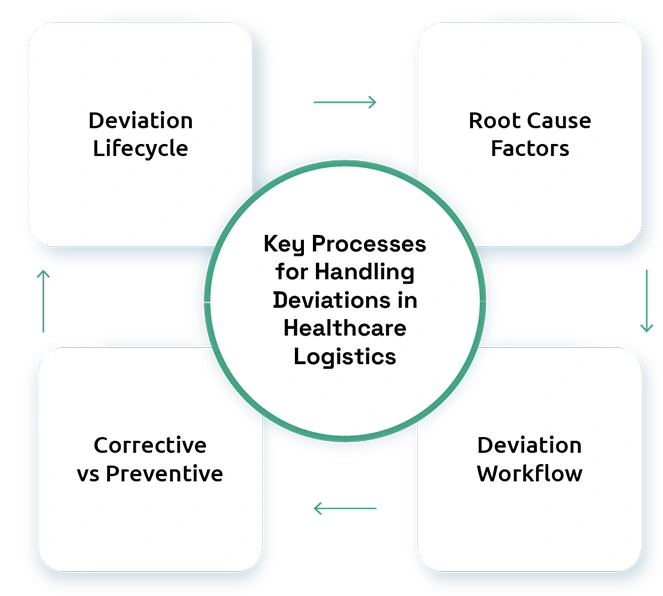
Key Processes for Handling Deviations in Healthcare Logistics
Identification and Documentation of Deviations
The first step in handling deviations is early detection. Deviations may grow during customs clearance, warehousing, inventory and order management, or cross-border shipments. All business must be documented with a precise schedule and shipment, including HS code or HTS Harmonized Tariff Schedule categorizations when relevant in global trade.
Root Cause Analysis
Once identified, a deviation must undergo a structured investigation. This includes reviewing shipping conditions, transit routes, customs broker handling, and handover locations. For shipments managed under DAP or other Incoterms, responsibilities must be clearly known to determine responsibilities across suppliers such as exporters, importers, or importer of record service providers.
Corrective and Preventive Actions
Corrective work sees the immediate issue, while preventive actions look to avoid repeating. This may require correct SOPs, increasing packaging validation, or improving supply chain optimization plans.
Best Methods for Managing Temperature Excursions in Healthcare Logistics
Real-Time Temperature Monitoring
Continuous tracking through validated data reductions allows a quick response to temperature excursions. Alerts allow logistics teams to intervene before product quality is reduced, mainly in premium delivery service methods designed for urgent healthcare shipments.
Qualified Packaging and Transport
Using cold chain packaging and checking transport routes is necessary for reducing risks. This is important during international shipping, where logistics delays connected to customs clearance or documentation issues can increase risk in global trade.
Defined Growing Guidelines
Clear escalation paths confirm that temperature excursions are assessed quickly. Collaboration between international freight services providers, exporter of record services, and importer of record service partners confirms faster decision-making in the supply chain.
Regulatory Expectations for Temperature Excursion Management
Approval with GDP Guidelines
Regulatory officials expect healthcare logistics operations to follow Good Distribution Practice (GDP) requirements. These include documented excursion management procedures, product effect evaluations, and retention of temperature records in global trade.
Traceability and Audit Readiness
End-to-end tracking is necessary, specifically for regulated cross-border shipments. Correct alignment of shipping documents, HS code declarations, and customs broker records supports inspection readiness and regulatory agreements.
Global Trade Considerations
While trade systems such as the generalized system of preferences (GSP) mainly change tariffs, approval gaps during shipping or storage can still show regulatory work. Healthcare organizations must align trade agreements with working quality controls.

Common Causes of Temperature Excursions and Handling Deviations
Transportation Delays
Delays caused by customs clearance issues, incorrect documentation, or misinterpretation of international shipping terms frequently result in extended issues outside of checking temperature ranges in logistics.
Inadequate Handover Controls
Poor work between logistics partners during handovers increases the risk of deviations. Clear SOPs and defined responsibilities under Incoterms help reduce these risks.
Infrastructure and Equipment Failures
Failures in cold storage systems, transport refrigeration units, or tracking devices are common causes of excursions. Preventive maintenance and equipment qualification are necessary for reductions.
Conclusion
Handling deviations and temperature excursions in healthcare logistics requires a proactive, systematic approach that combines quality, approval, and working efficiency. From real-time monitoring to systematic deviation management, every part of the logistics chain is involved in protecting products. As global trade grows and healthcare supply chains become more interconnected, using regulatory expectations with practical logistics execution is necessary. By increasing procedures, using supply chain optimization, and working closely with expert logistics and customs brokers, organizations can reduce risks, improve approval, and confirm safe delivery of life-saving products.
DID YOU KNOW?
The global medical cold chain packaging market size was valued at $15.18 billion in 2023 and is projected to grow at a CAGR of 14.8% from 2024 to 2030.
FAQs:
1. What is a temperature excursion in healthcare logistics?
A temperature excursion occurs when medical products are exposed to temperatures outside their approved storage or transport range, potentially affecting product safety or efficacy.
2. Why is deviation management important in healthcare logistics?
Deviation management ensures product quality, regulatory compliance, and patient safety by identifying, investigating, and correcting issues that occur during storage or transportation.
3. How can real-time monitoring reduce temperature excursion risks?
Real-time monitoring provides immediate alerts during transit, allowing logistics teams to take corrective action before product quality is compromised.
4. What regulatory guidelines apply to temperature excursion management?
Good Distribution Practice (GDP) guidelines require documented procedures, temperature records, and risk assessments for handling deviations in healthcare logistics.
5. What are common causes of temperature excursions in global shipments?
Common causes include customs delays, inadequate handover controls, equipment failures, and improper packaging during cross-border healthcare shipments.