
Understanding the Global Laptop Trade Report 2025: Laptop Import-Export by Country
The global laptop trade continues to accelerate in 2024–25, driven by remote work, digital education, and large-scale IT deployments worldwide. As cross-border shipments increase, businesses rely more heavily on freight forwarding services, DDP shipping, and importer of record (IOR) support to remain compliant with international regulations. Laptop shipments move through several checkpoints, including in-transit processing, export documentation, and customs clearance, where understanding the Harmonized System Code (HS Code) becomes essential for duty calculation. To keep high-value electronics safe, companies increasingly use warehouse management services, global trade compliance, and multimodal transport solutions that improve visibility and reduce delays. These supply chain best practices ensure that laptops are stored efficiently, cleared smoothly at borders, and delivered on time across global markets.
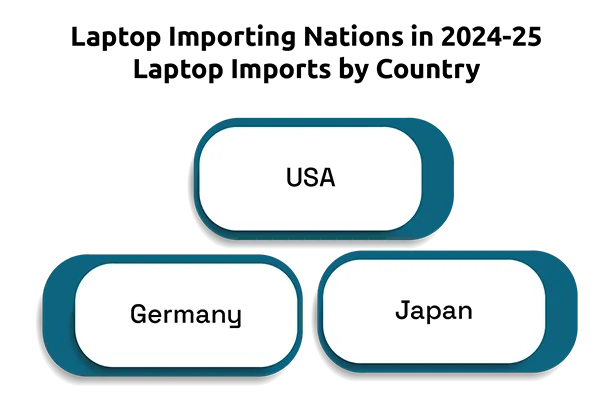
Laptop Importing Nations in 2024-25: Laptop Imports by Country
In 2024–25, major laptop-importing nations such as the USA, Germany, the UK, Japan, and India. These countries import large amounts of laptops to meet customers’ demand, support growing IT industries, and promote digital education. India has seen an increase in laptop imports due to its expanding startup ecosystem and government plans supporting digital growth. Laptop imports require import/export registration, use of HS codes, and, in many cases, importer of record services to confirm that regulations are met. Importers depend on Delivered Duty Paid logistics and export customs brokerage to reduce risks, while providing global supply chain services to make laptop delivery more effective.

Laptop Exporting Nations in 2024-25: Laptop Exports by Country
On the exporting side, China continues to dominate global laptop exports, with Taiwan, South Korea, Vietnam, and the Netherlands also playing significant roles. China’s massive manufacturing base, with effective freight forwarding services and a strong exporter of record service, makes it the world leader in laptop exports. These countries benefit from global trade facilitation measures and favorable export registration systems, confirming that their laptops reach global markets smoothly. Exporters frequently depend on full-service import-export support organizations that help with classifying goods under the HTS harmonized tariff schedule, making customs clearance easier, and following international export rules.
What Fuels Laptop Trade Growth in 2024–25?
Many factors drive laptop trade growth in 2024–25:
- There is a rising demand for high-performance laptops in AI, gaming, and data-heavy applications.
- Increased government spending on education technology.
- Expansion of multinational IT companies that require laptops in bulk.
- Improve global supply chain services, freight forwarding services, and DDP shipping options.
- Adopting export customs brokerage and importer of record services simplifies cross-border regulations.
- Trade guidelines such as the Generalized System of Preferences (GSP) also provide tariff benefits for developing nations, encouraging more participation in the laptop trade.
Leading Laptop Importing Companies: Global Laptop Importers Database
Many leading multinational distributors and retailers dominate the laptop importing market. Companies in the USA, Europe, and Asia depend on importer of record services to manage difficult import regulations and duties. Businesses also use Delivery Duty Paid services to reduce overhead, while global trade facilitation measures simplify transactions between exporters and buyers. Many importers work with freight forwarding companies to confirm their shipments arrive on time, while others use full import-export help and export customs brokerage services to follow the rules. These companies play a crucial role in the global laptop importers database, strongly connecting to manufacturing hubs and consumer markets.
How “In Transit” Status and Warehousing Solutions Improve Laptop Supply Chains
A critical part of laptop logistics is understanding the in-transit meaning, which refers to goods moving between origin and destination while still under the control of carriers or freight forwarders. For high-demand electronics like laptops, businesses depend on advanced warehouse solutions, bonded facilities, and warehouse management services to safeguard inventory during storage and distribution. Paired with international ecommerce shipping and white glove delivery for sensitive IT hardware, these systems create a reliable flow of goods across continents. With rising digital consumption, companies are now adopting AI-powered demand forecasting tools to predict laptop requirements, optimize stock levels, and strengthen telecom supply chain strategy—making global laptop trade smoother, faster, and fully compliant with trade compliance requirements.
Conclusions
The Global Laptop Trade Report 2025 highlights the importance of exporting and importing nations in sustaining global demand. With China leading exports and countries like the U.S. and India growing imports, the global market continues to expand. Organizations in the trade are required to understand HS codes and international export rules while using global supply chains and shipping services. DDP shipping, importer of record services, and export customs brokerage confirm smoother trade across borders, while guidelines such as the Generalized System of Preferences encourage inclusive growth. As laptops remain necessary to modern economies, efficient import/export business methods and global trade facilitation plans will continue to shape the market in 2025 and beyond.
DID YOU KNOW?
More than 25% of laptops shipped in 2024 had GenAI features; estimates indicate that by 2025, the share of AI-enabled devices could reach 60%.
FAQs:
Q1. Which countries are the top laptop importers in 2024–25?
The major laptop-importing countries include the USA, Germany, the UK, Japan, and India, driven by demand in IT, education, and digital infrastructure.
Q2. Who are the leading laptop exporters in 2025?
China remains the largest laptop exporter, followed by Taiwan, South Korea, Vietnam, and the Netherlands, due to strong manufacturing and supply chain networks.
Q3. How do HS codes and HTS harmonized tariff schedules impact laptop trade?
HS codes and HTS tariffs classify laptops, determine customs duties, and simplify global trade facilitation for importers and exporters.
Q4. What services help businesses in the laptop import-export trade?
Businesses rely on importer of record services, export customs brokerage, freight forwarding, and DDP shipping to ensure smooth and compliant cross-border trade.
Q5. What factors fuel laptop trade growth in 2025?
Laptop trade is driven by AI and gaming demand, digital education initiatives, bulk IT purchases by global firms, and tariff benefits under the Generalized System of Preferences (GSP).