
1000+ companies now know their exact duty, VAT, and IOR costs before they ship, not when customs holds their cargo hostage. Join them.
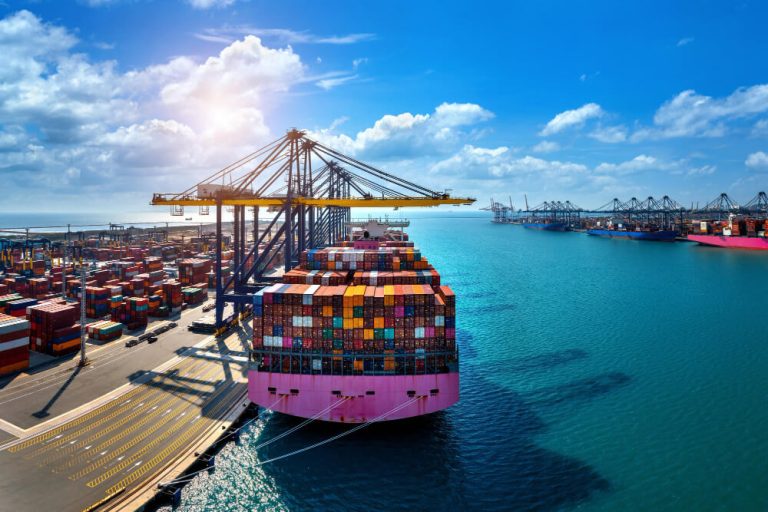
Brazil and Thailand maintain growing trade industries such as IT, aviation, medical devices, and automotive. Brazil’s major seaports, Port of Santos, Rio de Janeiro, and Paranaguá Port, manage most of its exports, while São Paulo–Guarulhos Airport, Rio de Janeiro–Galeão Airport, and Viracopos Airport work as global air freight hubs. Thailand has Laem Chabang Port, Bangkok Port, and Songkhla Port are the busiest sea entry points. Also, Suvarnabhumi Airport and Don Mueang International Airport are central for air cargo. The IT sector contributes to a growing demand for hardware exports from Brazil, while Thailand imports medical and automotive equipment at increasing rates. Aviation components also form a huge portion of two-way trade, requiring dependable freight forwarding services and agreement with HS Code and HTS harmonized tariff systems for smooth customs clearance.

The Importer of Record (IOR) confirms that goods arriving in Thailand are cleared with proper licensing, tax, and conform to Incoterms, removing risk for foreign shippers. Possibly using IOR services to manage duties and taxes effectively, including using Free Trade Agreements between Brazil and Thailand or other preferential arrangements to reduce or minimize import duties.
The Exporter of Record (EOR) service allows businesses in Brazil to legally export goods without establishing a local organization, which is mainly beneficial for IT and medical equipment providers. Import regulations and requirements can be difficult. Working with customs brokers, legal experts, or special EOR service providers is preferable to confirm smooth and complete trade between Brazil and Thailand.


Delivery Duty Paid shipping is one of the cheapest ways to ship a package in bulk since it such as customs duties, taxes, and complete delivery under a single invoice, making it more predictable for companies. While Delivered Duty Paid norms are gaining importance in global trade with Thailand, it’s vital to understand the variation when shipping from Brazil.
Data center logistics play a growing role, as secure and timely shipping of hardware allows IT companies to expand their digital systems. With these services, forwarders simplify agreement with harmonized system code classifications and make cheap international delivery possible.

When analyzing the cheapest way to send a package from Brazil to Thailand, several cost components matter:
The same size LCL shipment from Rio De Janeiro, Brazil, to Bangkok, Thailand can cost USD 331.95 and take 37 days.
Shipping a Less than Container Load (LCL) shipment of 5 CBM (cubic meters) and 750 KG from Santos, Brazil, to Bangkok, Thailand can cost approximately USD 269.45 and take 36 days.
From Canoas, Brazil, to Laem Chabang, Thailand, it can cost 416.7 USD with a shipping time of 36 days
Applies to the circulation of goods and services. Rates vary by state (e.g., 7-18% in São Paulo) and are also a credit to the importer.
Brazil uses the Cost, insurance, and freight method to calculate import tariffs and taxes, meaning they are based on the value of the goods plus the shipping cost.
While some services offer free basic insurance, additional coverage for valuable items is recommended and available.

Brazil exports servers, networking hardware, and electronics, which Thailand requires for digital infrastructure. Using DAP (Delivered at Place) shipping terms ensures cost control, while DDP reduces risk for IT vendors.
Aircraft parts and machinery are sensitive shipments. Compliance with Incoterms and precise HS code classifications is crucial for cheap overseas shipping without penalties.
With rising healthcare investment in Thailand, demand for Brazilian medical instruments has grown. DDP shipping here is ideal since it includes customs clearance and eliminates delays.
Brazil’s automotive components are in demand across Thailand’s manufacturing clusters. Exporting under the Generalized System of Preferences (GSP) reduces tariffs and enables cheap international delivery with better margins for businesses.
Their freight forwarding service includes everything from HS Code classification to customs brokerage, ensuring businesses get the cheapest way to mail a package without sacrificing compliance or delivery speed.
The cheapest way is usually Less than Container Load (LCL) shipping, which can cost as low as USD 269.45 for a 5 CBM, 750 KG shipment from Santos to Bangkok. Using Delivery Duty Paid (DDP) terms also reduces hidden costs.
Standard sea freight from Brazil to Thailand typically takes 36–37 days, depending on the route and port of entry. Air freight is faster but more expensive.
DAP (Delivered at Place) is preferred for cost control, while DDP (Delivery Duty Paid) is recommended for medical, IT, and sensitive goods since it covers customs clearance and duties.
Yes, an IOR service ensures your shipment complies with Thai import laws, HS code classification, and tax regulations, minimizing risks and delays.
Yes, businesses can benefit from preferential agreements like the Generalized System of Preferences (GSP) and Free Trade Agreements to reduce or eliminate tariffs.