
1000+ companies now know their exact duty, VAT, and IOR costs before they ship, not when customs holds their cargo hostage. Join them.
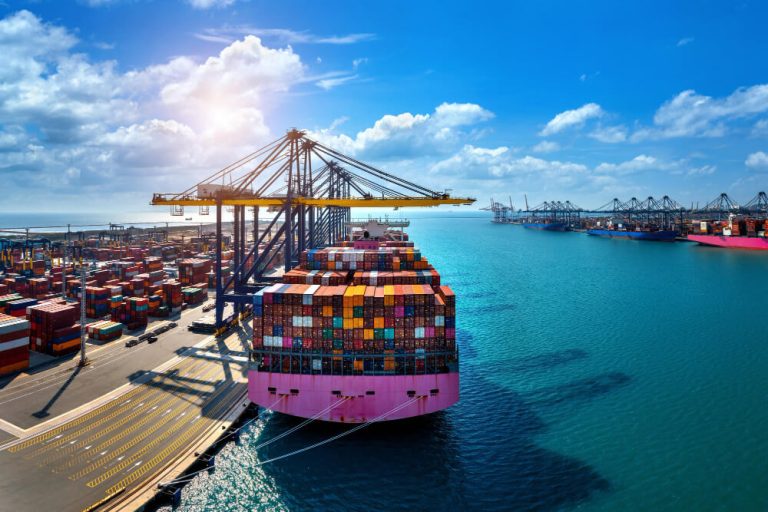
Sea shipping from China to the US is an important part of global trade. These shipping methods allow organizations to transport large quantities of goods affordably, though at longer shipping times than air freight. Major Chinese seaports such as Shanghai Port, Ningbo-Zhoushan Port, Shenzhen Port, and Qingdao Port manage a huge part of the sea freight forwarding service to the USA. America has major receiving ports such as the Port of Los Angeles total size of 7,500 acres, Long Beach total size of port is 3200 acres, New York/New Jersey a total container 4.2 million containers shipped yearly, and Seattle-Tacoma. While sea shipping controls bulk cargo, major airports such as Shanghai Pudong International Airport and Los Angeles International Airport also support urgent imports for high-value goods. Sectors such as IT, aviation, medical equipment, and the automotive industry heavily depend on effective logistics, HS Code, and HTS harmonized tariff categorizations to move parts and finished goods between the two countries under proper Incoterms and tariff preferences such as the Generalized System of Preferences (GSP).

When shipping goods from China to the US by sea, an Importer of Record is the entity legally responsible for confirming that all imports follow local laws. The IOR handles customs documentation, tariff categorization using HS Codes, payment of duties and taxes, and works with customs brokers for smooth clearance
The Exporter of Record is the entity responsible for confirming goods are exported from China in agreement with Chinese export laws. The EOR arranges export licenses, customs declarations, and approval with dual-use or restricted goods regulations.


DDP shipping is an Incoterm where the seller/exporter takes full responsibility for delivering the goods to the buyer’s final destination in the US, covering all costs such as freight, duties, taxes, and customs clearance.
While not directly combined with the shipping container, data centers and logistics systems play an important role in modern sea shipping work. They provide sources for tracking shipments, managing warehousing, and improving routing and warehousing.

Industry-specific sea shipping remains critical to China–US trade flows.
he massive size of electronics and semiconductors is shipped under tight harmonized system codes and frequently benefits from a generalized system of preferences for certain parts.
imports large aircraft parts, engines, and components, frequently requiring specialized packaging and certified freight forwarding service to confirm agreement with strong Incoterms.
sea freight covers everything from diagnostic equipment to surgical tools, where delivery duty-paid options help manage customs duties upfront.
continues to depend on bulk container shipping for parts, machinery, and finished vehicles, looking for the cheapest way to ship a package by using economies of scale and the lowest shipping rates through trusted forwarders and cheap international delivery routes.
Businesses frequently use freight forwarding services to compare cheap international shipping options, cheap UPS shipping rates, or the cheapest way to mail a package locally once the container is distract.
Many exporters and importers look for the cheapest way to send a package or cheap international shipping stations to improve DDP shipping or DAP arrangements.

Sea shipping from China to the USA mainly takes about 18 to 40 days, depending on the port of origin and location, vessel schedule, and whether the shipment is FCL or LCL. The shipping process starts with good packaging and inland logistics to the port.
A freight forwarding company or forwarders manage export documentation, book the cargo storage, and arrange the best route for cheap overseas shipping or cheap international delivery. After customs export clearance in China, the cargo is loaded onto the ship.
Upon arrival in the USA, customs brokers manage import clearance using the correct HS Code or harmonized system code and HTS harmonized tariff schedule.
The delivery duty paid (DDP shipping) option is sometimes used for smoother door-to-door service under Incoterms DAP or DAPS.
Also, steps include warehousing and final distribution, which may involve the cheapest way to ship a package locally using local carriers or finding the cheapest post office box address for final mile delivery. Customs broker fees, documentation, port charges, and inland shipping all contribute to the overall logistics cost.
Sea shipping typically takes 18 to 40 days, depending on the port of origin, destination, vessel schedule, and whether you choose FCL (Full Container Load) or LCL (Less than Container Load).
Top ports include Shanghai Port, Ningbo-Zhoushan Port, Shenzhen Port, and Qingdao Port. On the US side, major ports include the Port of Los Angeles, Long Beach, New York/New Jersey, and Seattle-Tacoma.
Key costs include product packaging, inland freight in China, export documentation, ocean freight (e.g., $1,200–$2,500 for a 20ft container), customs clearance, warehousing, and final delivery fees.
Industries such as IT (electronics), aviation (aircraft parts), medical (equipment & tools), and automotive (machinery, vehicles) depend on efficient sea freight and proper customs handling.
Work with experienced freight forwarders, use correct HS Codes and HTS harmonized tariffs, choose suitable Incoterms (DDP, DAP), compare international shipping rates, and plan for bulk shipping to secure better rates.