Insight
Semiconductor materials are essential components that control modern technology, including computing devices and crucial infrastructure systems. Global demand for these components continues to increase, leading to more strict export regulations. Semiconductor trade businesses need to understand the existing export control regulations and implement successful compliance approaches for their operations to remain legal. The blog examines active semiconductor export restrictions together with their effects and best compliance practices to ensure businesses stay clear of legal problems and operate across borders unimpeded.
As global semiconductor demand continues to grow, governments are strengthening export control frameworks to manage technological access responsibly. Understanding how these regulations function is important for businesses operating in international markets.
Overview of Semiconductor Export Controls
Export control systems differ from country to country, but their primary goal remains consistent to regulate the transfer of sensitive semiconductor technologies across borders.
Various countries establish export controls to manage semiconductor technology transfer to prevent safety risks, protect their foreign policy and national security interests, and stop malicious technology adoption.
Semiconductor export control falls under the U.S. Bureau of Industry & Security / BIS under the U.S. Department of Commerce, which operates strict laws. The controls extend to semiconductor designs, manufacturing processes, & finished products and typically adapt to new technologies & changing political relations between nations. Some restrictions through export controls prevent the distribution of advanced semiconductor technology to countries or organizations that pose risks to U.S. national security.

Why Semi-conductor Export Controls Are Important?
Semi-conductor export controls seek to stop sensitive technology from harming national security through military activities, surveillance capabilities, or strategic purposes. Modern society depends on semiconductors to operate most military applications alongside surveillance tools and cybersecurity infrastructure.
Because semiconductors power advanced computing, defense systems, artificial intelligence, & communication infrastructure, governments closely monitor their cross-border movement.
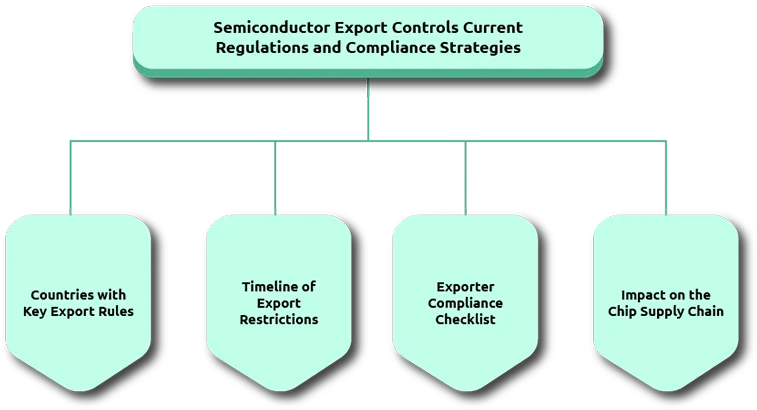
Key To Semiconductor Export Regulations
The international limitations on semi-conductor exports differ nationwide yet primarily focus on blocking shipments of advanced semiconductors and their associated technological components. The U.S. Export Administration Regulations / EAR is a major regulatory framework since it regulates dual-use items, including semiconductors. Semiconductor components requiring export licenses fall under specific performance threshold levels. They are specifically targeted for nations under economic sanctions or considered security threats.
The EU Dual-Use Regulation enables the European Union to control goods exported and technologies that serve civilian and military objectives, such as semiconductors. China, Russia, and North Korea face the toughest export limitations under these standards.
Implications of Export Controls for Businesses
These regulatory frameworks directly influence how businesses plan their manufacturing, sales, & international distribution strategies.
Businesses engaging in semiconductor manufacturing design & trading operations must understand how export controls operate because non-compliance leads to legal consequences and violations. Management to comply with export control regulations may trigger severe consequences, including major monetary fines, export bans, and criminal prosecution. Organizations might suffer reputation degradation through export control violations that harm their client suppliers and partner business connections.
Semiconductor export controls demand companies to extensively evaluate their international business activities by determining both the planned product destination use and the identity of final recipients. Businesses must ensure clients and partners do not appear on restricted lists while ensuring their products cannot be applied towards forbidden purposes. Export control compliance demands organizations build extensive documentation systems, maintain thorough due diligence practices, and conduct ongoing assessments for regulatory changes.
Compliance Strategies for Semiconductor Exports
Businesses must establish rigorous customer and end-user verification processes through due diligence to comply with semiconductor export controls by identifying persons who perform specified operations. Companies must perform regular regulatory monitoring since export laws are frequently modified, demanding businesses adhere to current regulatory demands. Companies need to obtain detailed knowledge about export license requirements because specific regions and products have particular rules. A successful internal compliance program and employee training about export control regulations enable companies to avoid violations. Working with experts from both legal and compliance departments helps companies manage their transactions while applying for licenses and decreasing potential risks.
Conclusion
National security protection and disruption of advanced technology abuse depend on implementing semiconductor export controls. Any business handling semiconductors must understand and follow export regulations to maintain operational efficiency and legal compliance. Businesses benefit from effective compliance strategies because these allow them to maintain compliance with semiconductor export controls and deliver service to their international customer base.
In today’s rapidly evolving trade environment, proactive compliance is not just a legal requirement, it is a competitive advantage. One Union Solutions helps businesses achieve regulatory compliance for export control standards and global trade management through expert guidance.
Did You Know,
The U.S. Department of Commerce shows that semiconductor exports generated more than $150 billion.
FAQ’s
1. What are semiconductor export controls?
Governments implement export controls for semiconductors to regulate international technology shipment of advanced semiconductor components, which protect them from unauthorized usage.
2. What part do export controls play in the semiconductor industry?
The enforcement of export management hinders business sales of high-tech semiconductor items to specific destinations, thus impeding worldwide trading routes and blocking vital technological resources.
3. What strategic measures should businesses use to satisfy requirements related to semiconductor export controls?
The implementation of export compliance requires businesses to perform extensive investigations of customers, track regulatory changes, secure required export licenses, and implement company-wide compliance systems.
4. What consequences do businesses receive when violating semiconductor export control requirements?
The breach of semiconductor export controls brings financial penalties, export bans, criminal prosecution, and damaging business reputation, which cause operational harm.
5. Do semiconductor export regulations undergo regular differences?
The government regularly modifies semiconductor export regulations through updates, frequently appearing when national security requirements or geopolitical conditions alter. Organizations need to monitor changes in regulations to uphold compliance.