Mundra Port is one of India’s key gateways for international trade, handling large volumes of containers connected to manufacturing, retail, technology, automotive, engineering, and other industries. When container movement slows at the port, the impact can quickly extend beyond the terminal itself.
Recent issues involving container management and yard operations at Mundra have highlighted how dependent India’s EXIM supply chain is on easy port coordination. Delays can affect trip schedules, inland transportation, warehouse planning, customs operations, and the final delivery of goods.
Why Mundra Port Is Important to India’s EXIM Trade
Mundra, located on India’s western coast, serves businesses shipping cargo between India and global markets. It provides an important link between ports, inner-city management centers, warehouses, and distribution hubs due to its road and rail network connectivity.
Exporters can keep cargo shipping plans with the help of efficient container management. Since delays can affect inventory levels, customer deliveries, & manufacturing schedules, timely container availability is essential for importers.
Because of this, any problems at a large container gateway are more significant than local logistics problems. It may set off a series of delays throughout the larger supply chain.
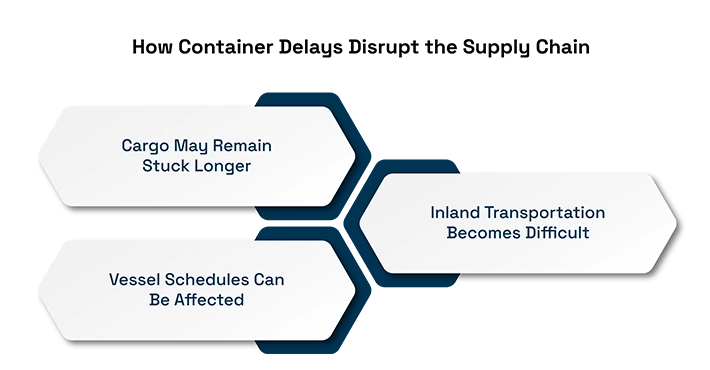
How Container Delays Disrupt the Supply Chain
1. Cargo May Remain Stuck Longer
Containers may take longer to travel between ports, storage facilities, shipping services, and ships when shipping yards are overfilled or have operational limitations.
As a result, importers may face a delay in the availability of required machinery, parts, and completed goods. If exporters store containers ahead of ship cut-off times, they may also face difficulties.
Businesses find it increasingly difficult to control their initial delivery times the longer products are in the logistics network.
2. Inland Transportation Becomes Difficult
Port issues do not stop at the port gates. Truck operators, rail providers, freight forwarders, & warehouses can also be affected.
Transport companies may need to arrange pickups if containers are released later than planned. Extra waiting time may result from a lack of available trucks or changes to scheduled schedules.
Even a simple port delay can cause missed storage slots or delayed delivery for companies with limited delivery windows.
3. Vessel Schedules Can Be Affected
Trip schedules for container shipment are meticulously prepared. The time of loading, unloading, transshipment, and subsequent sailing can all be impacted by a disturbance at one port.
While importers could have to wait longer for containers arriving on delayed services, exporters can miss scheduled vessel cut-offs.
When congestion reduces terminal productivity, shipping companies may also modify their operational schedules. For businesses scheduling international shipments several weeks in advance, this may cause uncertainty.
Higher Costs for Importers and Exporters
Port delays can increase logistics costs even when the underlying freight rate remains unchanged.
Additional expenses may come from container storage, detention, demurrage, truck waiting time, rerouting, warehouse changes, or urgent transportation arrangements. Businesses may also face higher inventory costs if goods remain unavailable for longer.
For importers managing high-value equipment such as servers, networking equipment, industrial machinery, or electronics, delays can have an even huge commercial impact. The cost of a late shipment may extend beyond transportation cost if the equipment is need for a project or facility launch.
Impact on Exporters
To fulfilll their international delivery obligations, Indian exporters rely on consistent vessel schedules and container availability.
When export cargo misses a vessel cut-off due to a delay at Mundra, issues may arise. Companies might then have to relocate the shipment to a different sailing, which could delay delivery.
Time-sensitive goods or shipments linked to set production and installation schedules may find this especially difficult. Relationships with foreign purchasers who anticipate dependable delivery performance may also be impacted by frequent delays.
Customs and Documentation Still Matter
A busy port is not always caused by a single operational problem. Customs paperwork, cargo verification, regulatory needs, incorrect shipment details, & incomplete documents can add to the overall processing time.
Importers should therefore review their paperwork before cargo reaches the port. Accurate commercial invoices, packing lists, shipment documents, classification details, permits, & other needed data can help minimize avoidable delays.
Organizations should also understand who is responsible for customs clearance & regulatory compliance in the destination country before shipping.
How Organizations Can Reduce the Impact
Organizations cannot manage every port issue, but they can improve their ability to respond.
Plan shipments with additional time: Avoid managing schedules around the impression that every container will ship properly according to the original plan.
Track containers closely: Regular visibility into trip schedules, container status, terminal shipment, & delivery appointments can help organization identify problems early.
Handle similar transportation options: When conditions change, the company can improve identical ports, routes, rail connections, or trucking connections based on the cargo and destination.
Get documents ready in advance: Completing cargo and customs paperwork before to arrival might reduce delays based on by official problems.
Manage interactions with logistics partners: During times of difficulty, importers and exporters should maintain contact with freight forwarders, carriers, customs brokers, transporters, and warehouse operators.

Why Supply Chain Visibility Matters
Delays in Mundra containers present how mainly port-level problems can effect the huge India EXIM supply chain. A container travels through some linked phases, added with shipping lines, ports, customs officials, transport companies, warehouses, & final importers, rather than transportation on its own.
Increased visibility enables organization to respond before a delay worsens. When needed, organizationn can adjust delivery schedules, interact with clients, reschedule transportation, & enhance comparable logistics arrangements.
Conclusion
Container delays can have an effect on organizations well beyond Mundra Port because the port is important to India’s global trade. Delays can produce issues for importers and exporters, reduce warehouse efficiency, increase shipping costs, and issue with delivery dates.
Organizations can reduce the impact by keeping documents up to date, controlling shipments, increasing delivery times, and handling contact with their logistics partners. Companies may cover port difficulties & handle easy shipping for their EXIM operations with the support of a flexible and well-planned supply chain.
Did you know?
Mundra Port handles nearly 35% of India’s container trade, making it a major gateway for the country’s EXIM supply chain. The port has four container terminals with a combined capacity of 7.5 million TEUs and strong road and rail connectivity for cargo movement.
FAQ
Why do Mundra container delays affect the wider supply chain?
Because containers connect multiple stages of international trade, including shipping, customs, trucking, warehousing, and final delivery. A delay at the port can therefore affect several downstream operations.
Can Mundra delays increase import costs?
Yes. Depending on the circumstances, businesses may face additional storage, detention, demurrage, trucking, warehousing, or rerouting costs.
How can importers prepare for port disruptions?
Importers can monitor shipment status, prepare documentation early, allow additional time in delivery schedules, maintain communication with logistics providers, and evaluate alternative transportation options.
Do port delays affect exporters too?
Yes. Exporters may miss vessel cut-offs, face container positioning problems, or need to move cargo to a later sailing, which can affect delivery commitments.
What is the role of supply chain visibility during port disruptions?
Supply chain visibility helps businesses identify delays earlier and make timely decisions about transportation, warehousing, customer communication, and alternative logistics arrangements.