
1000+ companies now know their exact duty, VAT, and IOR costs before they ship, not when customs holds their cargo hostage. Join them.
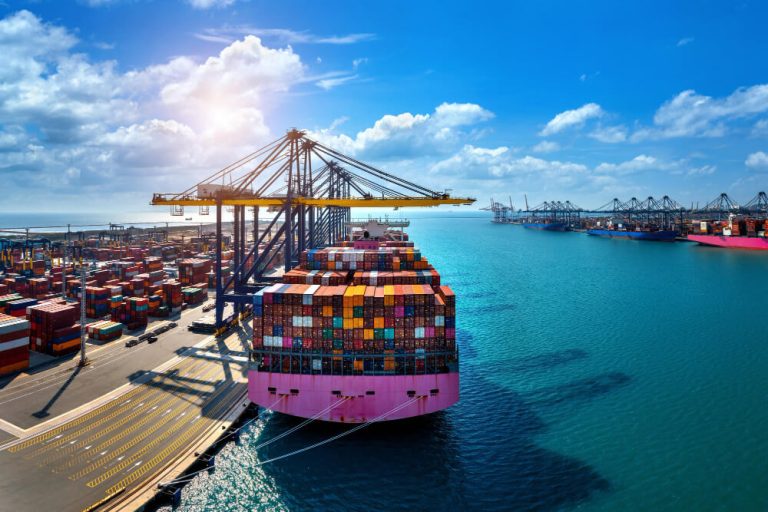
Shipping goods from the United Kingdom to the USA remains one of the busiest crossing the Atlantic trade routes, connecting two of the world’s biggest economies. Major UK ports such as the Port of Felixstowe, the Port of Southampton, and London Gateway manage huge container cargo sizes. At the same time, Heathrow and Manchester airports manage valuable air freight. On the US side, major hubs such as the Port of New York, New Jersey, Los Angeles, and Savannah, alongside airports such as JFK, LAX, and Chicago O’Hare. This strong station sees frequent shipments for the IT sector (including servers and electronics under relevant HS codes), aviation equipment (spare parts and machinery categorized under HTS harmonized tariff rules), medical devices (diagnostic and surgical tools), and the automotive industry (cars, parts, and electric vehicle components). Both countries also benefit from trade agreements such as the generalized system of preferences, simplifying tariff systems for select goods and confirming smoother logistics.

Businesses depend on multiple key services for effective transatlantic shipping. An Importer of Record (IOR) service helps companies follow difficult US customs requirements, allowing smooth customs clearance and delivery.
The Exporter of Record (EOR) confirms all export documentation and regulatory issues are met before goods leave the UK. These services also help businesses find the cheapest way to ship a package, manage cheap international shipping, and partner with dependable forwarders for cheap overseas shipping.


Selecting DDP shipping means the seller takes care of all duties and taxes in advance, reducing delays at the location. Using the correct incoterms, such as DAP or DAPS, simplifies requirements and fees.
Companies shipping IT equipment for data centers frequently use customized IOR/EOR and freight forwarding services to ensure sensitive servers and networking gear reach US systems without delays.

The cost of shipping from the UK to the USA depends on many elements:
Partnering with an experienced forwarder helps businesses secure the lowest shipping rates and reduce cheap UPS shipping or other express carrier deals.
Based on the HTS harmonized tariff schedule, categorized and applicable tariffs under trade agreements.
such as delivery duty paid (DDP) or delivered at place (DAP), determine which party is responsible for paying specific portions of the shipping cost.
Air shipping is quick but at a higher price than sea freight. Organizations looking for the cheapest way to mail a package or find the cheapest post office box for returns frequently improve in size and delivery schedules.
Protective packaging, insurance, and final mile delivery add to the total bill, but confirm damage-free arrivals, which is crucial for high-value IT or medical
White glove handling, tracking, and storage add to costs but provide satisfaction for sensitive or regulated shipments.

The IT industry continues to ship high volumes of networking hardware, laptops, and servers, depending on precise HS codes and specialized packing for safe transit.
The aviation sector imports aircraft engines, maintenance parts, and components under strict agreement standards.
The medical industry sees steady exports of diagnostic machines and surgical instruments, with regulations demanding specialized cold chains and urgent deliveries.
The automotive industry moves electric vehicles and car parts in bulk, using cheap international delivery solutions to keep costs low and supply chains steady.
For all these industries, success depends on finding the cheapest way to send a package, negotiating cheap international shipping, and using smart freight forwarding agreements.
The cheapest way usually depends on package size and urgency—sea freight is cost-effective for large loads, while economy air options or postal services suit small parcels. Working with a freight forwarder helps secure the best rates.
An IOR handles all legal customs requirements when goods arrive in the USA, ensuring smooth clearance, paying duties, and preventing costly delays or penalties.
Popular Incoterms include DDP (Delivery Duty Paid), where the seller pays all duties and taxes upfront, and DAP/DAPS (Delivered at Place), which splits responsibility at delivery.
Key sectors include IT (servers and networking gear), aviation (aircraft parts), medical (diagnostic devices), and automotive (EVs and spare parts).
Using accurate HS codes, leveraging trade agreements like the Generalized System of Preferences, and partnering with an experienced IOR/EOR helps businesses optimize tariff payments and avoid overcharges.