
1000+ companies now know their exact duty, VAT, and IOR costs before they ship, not when customs holds their cargo hostage. Join them.
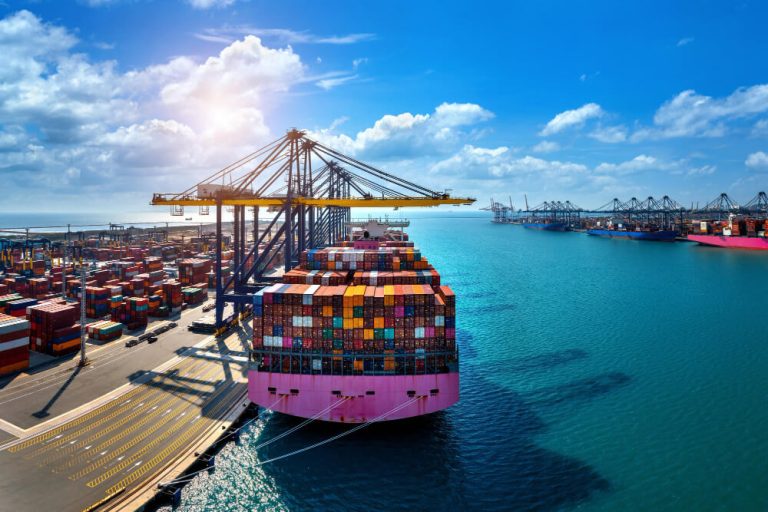
Nigeria and the United States share a variety of trade relationships, with Nigeria being one of the largest economies in Africa and a major partner for the USA in IT devices, Automobile goods, and industrial goods. Major Nigerian ports such as the Port of Lagos (Apapa and Tin Can Island), Port Harcourt, and Onne Port handle significant volumes of cargo forwarding services yearly. Murtala Muhammed Airport in Lagos and Nnamdi Azikiwe Airport in Abuja are the two major air freight entrances. For seaports of Houston and New York/New Jersey, as well as the Port of Los Angeles, are major entry points in the USA. At the same time, air cargo mostly arrives through Hartsfield–Jackson Atlanta International Airport, Chicago O’Hare, and Miami International Airport. The logistics flow between the two countries frequently uses HS codes and HTS harmonized tariff classifications to simplify customs. The IT sector contributes over USD 70 million in bilateral trade, while aviation connections help transport medical equipment and valuable automotive parts. The generalized system of preferences (GSP) program frequently supports this cross-border trade, which reduces tax on eligible goods.

Reliable freight forwarding and supply chain management are important for organizations trading between Nigeria and the USA. Using an Importer of Record (IOR) service confirms that all approval requirements from HS codes to Incoterms are handled accurately, reducing delays and unexpected costs.
An Exporter of Record (EOR) simplifies export approval, confirming that the necessary documentation, duties, and export declarations work with the location’s country requirements. If you select cheap UPS shipping, cheap international delivery, or the cheapest way to mail a package overseas.


For many shippers, DDP shipping is a convenient option under DDP service, where the seller supports full responsibility for shipping, taxes, duties, and delivery at the buyer’s location, removing unknown fees and giving importers clarity. This aligns well with modern DAP and DAPS incoterms.
Many global brands also depend on data centers to track and manage shipments, confirming secure data storage and live updates, an advantage for IT, aviation, medical, and automotive supply chains. Working with trusted forwarders helps achieve the lowest shipping rates.

Different industries have unique logistics needs when shipping from Nigeria to the USA.
Demand for secure servers and electronics is rising in the IT sector, with Nigerian exports of tech components growing by 15% annually.
The aviation industry depends on specialized freight forwarding for aircraft parts, with high-value shipments needing precise harmonized system codes and agreement with HTS harmonized tariffs.
The medical industry depends on cold chain solutions for biotech and sensitive medical devices, where using a strong freight forwarding service with delivery duty paid options confirms timely and safe delivery.
In the automotive sector, Nigeria exports reconditioned parts and imports high-performance vehicles, using cheap international delivery methods and the cheapest way to mail a package for smaller spare parts.
Working with experienced forwarders confirms the cheapest way to ship a package without compromising approval or shipping time.
Generalized System of Preferences and the right shipping strategy, businesses can expand confidently across borders and industries, from IT and aviation to medical and automotive sectors.

When estimating the cost of shipping from Nigeria to the USA, businesses should consider multiple parts to find the cheapest way to ship a package globally.
Major cost elements such as local logistics in Nigeria, customs clearance, freight forwarding service fees, carrier charges (air or sea), insurance, and final-mile delivery in the USA.
Using services such as DDP shipping or DAP can make cost predictions easier.
For small parcels, cheap international shipping options such as postal services may be the cheapest post office box method. Still, combined freight forwarding can bring cheap overseas shipping rates for bulk shipments.
On average, air freight from Lagos to New York can cost between $5–$8 per kg, while sea freight for a 20-foot container ranges from $2,500–$3,500, depending on Incoterms and service level.
The cheapest method depends on shipment size. For small parcels, postal services may be best, while bulk shipments benefit from consolidated sea freight with trusted freight forwarders.
Major Nigerian ports include Apapa, Tin Can Island, Port Harcourt, and Onne. U.S. entry points include Houston, New York/New Jersey, and Los Angeles for sea freight.
An IOR ensures your shipment meets all customs, HTS tariff, and HS code requirements, reducing delays, penalties, and hidden costs.
A 20-foot sea freight container usually costs between $2,500 and $3,500, while air freight can range from $5 to $8 per kg, depending on Incoterms and services chosen.
The IT, aviation, medical, and automotive industries rely on secure, compliant shipping solutions, including cold chain, precise documentation, and real-time tracking.
Major Nigerian ports include Apapa, Tin Can Island, Port Harcourt, and Onne. U.S. entry points include Houston, New York/New Jersey, and Los Angeles for sea freight.
An IOR ensures your shipment meets all customs, HTS tariff, and HS code requirements, reducing delays, penalties, and hidden costs.
A 20-foot sea freight container usually costs between $2,500 and $3,500, while air freight can range from $5 to $8 per kg, depending on Incoterms and services chosen.
The IT, aviation, medical, and automotive industries rely on secure, compliant shipping solutions, including cold chain, precise documentation, and real-time tracking.