
1000+ companies now know their exact duty, VAT, and IOR costs before they ship, not when customs holds their cargo hostage. Join them.
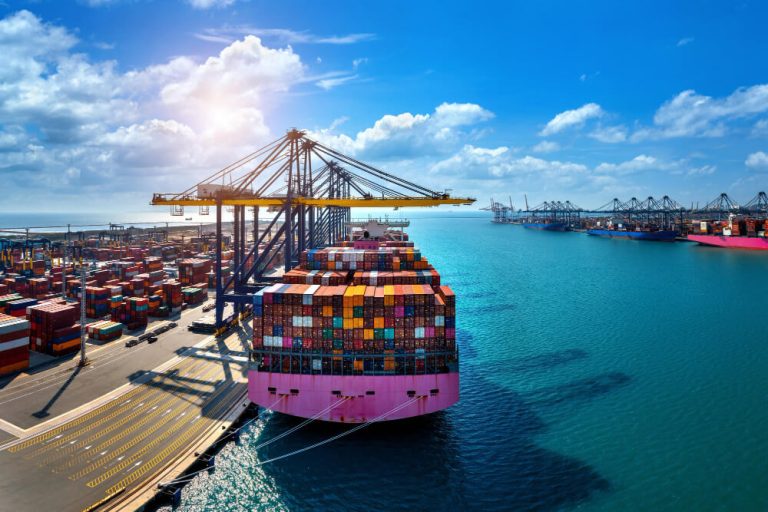
Shipments from Indonesia to the United States may be subject to customs duties, additional tariffs, and other import charges depending on the product being imported. The applicable charges are influenced by the product’s Harmonized Tariff Schedule (HTS) classification, customs value, country of origin, and any trade measures or exemptions in effect at the time of importation. Importers should verify the correct classification and applicable duty rates before shipping rather than relying on estimates based only on the product description or declared value.
Before dispatch, businesses should prepare an accurate commercial invoice, packing list, and transport documents, and confirm that the declared value, country of origin, and product classification are consistent across the shipment records. For technology equipment, aircraft components, medical devices, and automotive parts, additional product-specific requirements may apply. Checking the latest CBP guidance and the applicable HTS provisions helps importers estimate potential costs, identify documentation gaps, and reduce the risk of unexpected charges or customs delays. Actual duties, release decisions, and clearance timelines depend on the shipment and the rules in force when it enters the United States.

To simplify global trade and guide difficult Incoterms, businesses increasingly depend on professional services. One important option is using an Importer of Record (IOR), which confirms agreement with U.S. customs laws by managing all documentation and taxes on behalf of the importer.
When selecting an EOR service provider for shipping from Indonesia to the USA, major factors to consider include experience, agreement capabilities, technology used, customer service, and pricing transparency. Similarly, an Exporter of Record (EOR) service confirms that Indonesian organizations follow local export laws and regulations.


Another popular solution is DDP shipping (Delivery Duty Paid). This service transfers all responsibility, duties, customs clearance, and final delivery to the seller or forwarder, giving U.S. buyers an easy experience. It’s mainly advantageous for medical and tech equipment, where delays can be costly.
Data centers depend on seamless freight forwarding services to maintain equipment uptime. Using expert freight forwarders reduces delays, routes, and confirms approval with documentation such as HS codes. Choosing services with flexible DAP and DAPS Incoterm options can improve affordable depending on business requirements.

When it comes to the cheapest way to ship a package from Indonesia to the USA, many elements determine cost: shipment size, delivery speed, and the method of transport.
For small goods, cheap international shipping options such as postal services or the cheapest post office box delivery are practical.
For larger shipments, cheap overseas shipping through ocean freight provides the lowest shipping rates, mainly when working with experienced forwarders.
One Union Solutions provides complete support in this regard, from managing cheap international delivery to full DDP logistics.
Our team confirms you benefit from cheap UPS shipping, improved freight forwarding, and approval with all relevant U.S. import guidelines using correct HS codes and taxes under the HTS harmonized tariff schedule.
We customized the solution, be it the cheapest way to send a package, the cheapest way to mail a package, or a cheap international freight forwarding service, to suit your organization's budget.
Confirming agreement with Indonesian export laws and US import laws. Obtaining the necessary export licenses in Indonesia.

In IT, the U.S. imports Indonesian-made circuit boards, data cables, and other electronic components. In 2024, this sector alone contributed over $750 million in bilateral trade.
For aviation, precision parts and turbine components are commonly exported under strict approval with aviation-grade HS codes
The medical industry has seen growth in the exchange of surgical instruments, biotech, and diagnostic devices. Recent numbers show a 20% year-on-year increase in medical equipment shipments.
The automotive sector remains vibrant with exports of brake systems, tires, and wiring systems, which are routed mainly through DAP or DDP Incoterms to major U.S. auto hubs.
Each of these industries benefits from expert freight forwarding services, correct categorizations through harmonized system codes, and reduced taxes under the generalized system of preferences, when applicable.
The most affordable option is ocean freight for large shipments, while postal or express services are more cost-effective for small packages. Working with experienced freight forwarders can further reduce shipping costs.
Key documents include the commercial invoice, packing list, bill of lading, certificate of origin, and the appropriate HS codes for customs clearance.
An IOR handles compliance with U.S. import regulations, manages documentation, pays duties and taxes, and ensures smooth customs clearance on behalf of the importer.
DDP service shifts full responsibility to the seller or forwarder, covering duties, customs clearance, and delivery, offering a hassle-free experience to U.S. buyers.
HS and HTS (Harmonized Tariff Schedule) codes classify products for customs, ensure compliance, and help calculate duties and taxes accurately.