
1000+ companies now know their exact duty, VAT, and IOR costs before they ship, not when customs holds their cargo hostage. Join them.
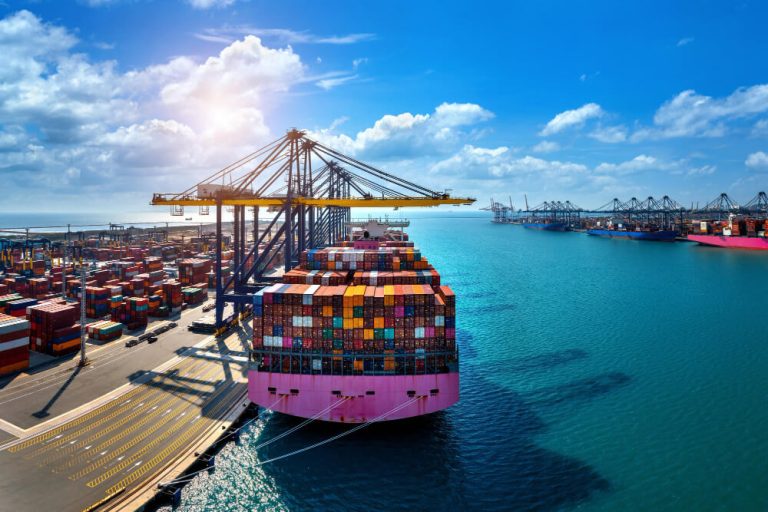
Shipping between the U.S. mainland and Hawaii may appear intimidating because of logistical issues, distance characteristics, and sea transportation. Knowing how to ship the goods, the costs involved, and the documentation is essential regardless of the various types of goods. This blog will help you simplify your shipments by informing you of the affordable methods of shipping, major logistics centers, and the most important documentation to fill out.

Importing goods by the Importer of Record (IOR) must also address the customs requirements of shipments entering the U.S. through Hawaii. These involve handling customs clearance, payment of dues and taxes, and this entails that all documentation that is needed is present. By using an IOR, companies simplify the process of importing goods without acquiring a U.S. entity, and at the same time, their activity is compatible with the U.S. import laws.
Exporter of Record (EOR) ensures that the exported goods in Hawaii and into the U.S. align with Hawaii export requirements and U.S. regulations. All necessary paperwork relating to exports is done on behalf of the client and ensures that every shipment is legally exported. Through the services of an EOR, a company will avoid the associated risks of delays and ease in following international trade laws.


Delivered Duty Paid (DDP) is best because all duties, taxes, and deliveries are collected in advance, so that the recipients in the United States do not have to pay extra after receiving the goods or filling out documents. The service is very useful when it is necessary to transport high-cost shipments, like medical equipment and IT equipment, and it is also very easy to use because all the shipment expenses are paid, and it is predictable.
Data Centre Solutions offers customised logistics in delivering IT-based tools, servers, and data discs between the mainland of the U.S. and Hawaii. The service ensures that the IT infrastructure of crucial magnitude is transported under secure transportation and complies with strict regulatory norms. Data Centre Solutions can provide secure and effective relocation of delicate IT assets with a special focus on minimising the risk of damage and the operating time of the operating system.

The recording size, the urgency, and the cost will determine the shipping mode in Hawaii. Air Freight is the most suitable mode to book high-value, small, and/or time-conscious cargos whose cost is approximately 1.50 per pound. Shipping bulk cargo at sea freight is more affordable, and a 20-foot container typically ranges between $500 and $1000. Road freight proves to be a cheaper option than transporting goods to the ports on the mainland.
Sensitive items, whether medical, aviation, or IT items, must be shipped in temperature-controlled and shock-proof packages to ensure that the items are safe and in one piece.
In the case of general cargo, strong containers or boxes are imperative in ensuring that the goods are safe during transportation, as they are prone to damage that could be experienced during the journey.
Packaging it well using sea freight is important, as most packages are delayed and subjected to different weather pirates. The packaging ought to guarantee the insulation of the goods from the effects of environmental issues in case of long transit times.
The other significant ports in Hawaii, the Port of Honolulu, the Port of Hilo, Kahului Port, and the Honolulu International Airport (HNL all contribute to the easy transportation of goods to the mainland of the United States. These terminals service seaborne and air traffic, which means that transporting the containers and the ensemble of products becomes a success.
When the order is confirmed, goods are sorted and packed in warehouses. The necessary documents, such as commercial invoices, customs declarations, etc., are prepared. Upon arrival at the ports of mainland U.S., such as Los Angeles (LAX), San Francisco (SFO), or Seattle (SEA), the goods clear customs and are delivered utilizing road freight to conclude the delivery, contingent on the shipping method of choice.

Some special regulated goods, e.g., certain IT, avionics, medical, or auto equipment, may need a special import permit or federal license; clearing these regulatory requirements before shipment will ensure entry and compliance with such sensitive cargo.
It contains the shipment's value, description, & quantity needed to clear customs.
Assists the customs in confirming the shipment's contents and whether they match or not with the commercial invoice.
Accurately coded products using Harmonized System (HS) or Harmonized Tariff Schedule (HTS) codes to meet the laws of the U.S. import.
Failure to complete the required documentation may result in delays, fines, or seizure of goods. Some common errors relate to having the wrong descriptions of the products or not having an HS code. These can be avoided, & compliance can be ensured by working with experienced customs brokers.
The lowest shipping cost would be sea freight, whereby a large shipment would be made; however, it is slower than air freight.
Air transport involves 1-3 days of transportation, whereas sea transport involves 1-2 weeks, depending on the route.
Customs clearance will require a commercial invoice, packing list, and categories of HS/HTS codes.
Yes, most shipping companies provide the possibility to track shipping by air, ship, and roadway.
A special export license may be needed for certain medical equipment, depending on what kind of goods must be shipped.