
1000+ companies now know their exact duty, VAT, and IOR costs before they ship, not when customs holds their cargo hostage. Join them.
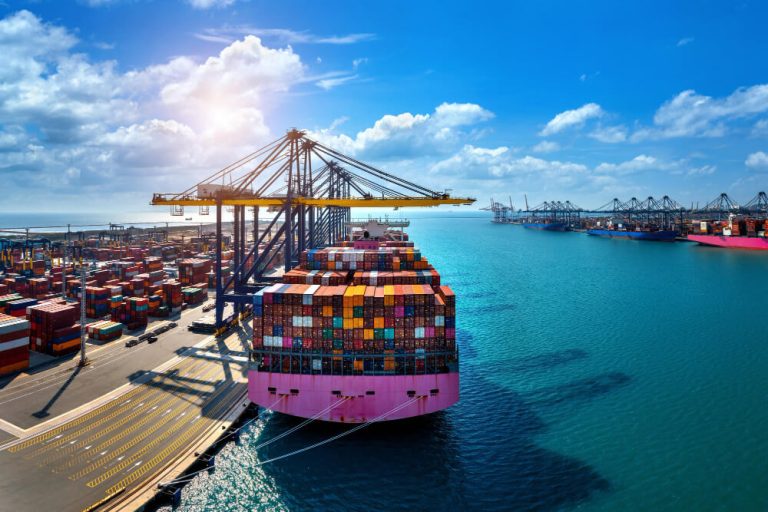
Transporting Australian goods to the USA is a complex operation regarding logistics, conformity, and documentation, making it an uncomplicated and cost-efficient procedure. Providing high-value, bulk, or even regulated items you need to ship, consider that the selected services should answer business requirements. Our services aim to make the shipment process as smooth as possible, whether it involves customs duties, tax management, or timely delivery. In this guide, we shall look at the major services that make the shipping procedure between Australia and the USA so simple and efficient that we can get a hassle-free, time-bound, and completely compliant transportation process each time.

The Importer of Record handles all customs duties in the USA on goods sent from Australia. This includes document management services, compliance with legal requirements, payment of duties & taxes, and clearance of goods through USA customs. Using an IOR allows businesses to bypass the need for a physical presence in the USA, making the process more cost-effective and simplified.
An Exporter of Record also assures that the exportation of products out of Australia and into the USA goes properly. Services in this regard entail the preparation of the export documents and the required forms and adherence to Australian and US regulations.


Delivered duty paid (DDP), the service provider is responsible for writing the shipping, customs charges, taxes, and delivery costs. The advantage of this service is that receivers do not need to pay for extra customs costs or any further incomplete paperwork regarding their shipments. DDP can also serve very well in transporting goods of high value, where a smooth and transparent delivery process is required.
Data Centre Solutions provides safe and secure shipping of IT equipment, servers, firewalls, and network storage devices in Australia and the USA. The services are used to keep up-to-date with data privacy laws, safely store data, & minimize disruptions.

Shipping the goods may seem complicated at first; you will need to decide which method to use depending on the needs of your business, be it speed, cost, or product nature. The major shipping alternatives that can aid in simplifying the process of transporting goods between Canada and the USA include the following.
Air freight is the fastest since delivery of shipments takes 1-5 days. It is most suitable in cases of rush shipment that involve high-value goods that require rapid transportation; it is thus suitable in cases of time-sensitive equipment or goods.
In cases of bulk or large consignment, ocean transportation is extremely economical. This is a 3-6-week process, but it is more affordable with Full Container Load (FCL) when transporting large shipments. However, with a small amount of cargo or lighter equipment, Less than Container Load (LCL) can be used.
In small but time-bound consignments, express courier services provide door-to-door services exceeding 2-5 days. It is a more expensive service, but it will help guarantee a fast and convenient delivery, especially on smaller parcels requiring quick transportation between destinations.
The shipping charges depend on the weight, the volume, and the urgency. The charges for flying cargo are based on weight and volume. In contrast, sea transportation is cheaper for large volumes, providing good service for bulk supplies.
The leading hubs in the USA, such as Los Angeles, New York, and Houston, provide excellent logistic support at competitive prices, guaranteeing favourable shipping. These centres are important to the proper delivery of services within the USA.
Placing an order with fewer shipments can reduce the cost per shipment. Large-volume shippers are also likely to get better rates with carriers at lower shipping rates and enhanced efficiency in delivery.

There is more than meets the eye when shipping regulated equipment, especially when moving it across places. U.S. Customs and Border Protection (CBP) applies vigorous documentation requirements, particularly for electronics, medical, and transport equipment. Preparation of a commercial invoice, bill of lading or airway bill, packing list, & certificate of origin should always be prepared.
The harmonised system code (HS code) or harmonised tariff schedule (HTS) plays a key role in establishing customs duties and ensures that consignment is cleared without problems.
Give your measurements and weights of your goods to be shipped accurately, eliminating surprises of pricing and compliance. The customs agencies use data on this to determine duties and secure handling.
The selection between Delivery Duty Paid (DDP) and Delivered at Place (DAP) influences who will pay customs duties and clearance. Under DDP, all the duties and customs fall on your role as shipper, which promises to give your buyer a flawless experience. DAP is a cargo released to the recipient. It is now the responsibility to take care of customs and pay duties upon arrival.
Trade between the two countries is doing well, with statistics showing that AUD 80 billion worth of services and goods have been exchanged between Australia and the USA in 2024.
Sea freight can generally offer the most at the best value on large or heavy shipments. In contrast, air freight can perform best when there are urgent or valuable goods.
DDP is wonderful for dealing with everything regarding compliance and provides a rosy experience to your recipient; DDP is a good work when your buyer in the USA will handle the handling of customs clearance.
It will need a commercial invoice, a packaging list, a bill of lading or air waybill, a certificate of origin, & special permits to certify goods subject to regulation.
The duties are calculated with the HS code or HTS harmonized tariff, the value of the goods, and trade agreements such as the AUSFTA or the generalized system of preferences.
Air freight typically includes one to five days, express courier includes two to five days, and sea freight includes three to six weeks, depending on route and service level.