
1000+ companies now know their exact duty, VAT, and IOR costs before they ship, not when customs holds their cargo hostage. Join them.
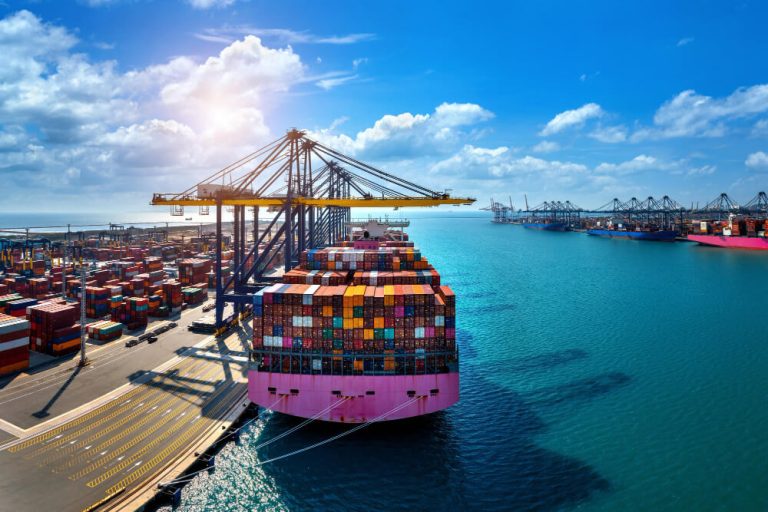
Shipping freight to the USA from China is an important process in international trade, as China is also the USA’s largest trading partner. Certain complexities are involved in the process, particularly when sending equipment such as electronics goods, machine goods, medical equipment, or aircraft equipment. The significance of this shipping route does not go unnoticed, seeing that major U.S. ports of Los Angeles, Long Beach, & New York/New Jersey move millions of tons of cargo each year. This shipping route should thus be well planned, and knowledge of logistics, legalities, and customs should be understood. Effective delivery or searches should consist of appropriate documentation, the choice of the most effective route of shipment, and compliance with the laws of not only America but also China.

An Importer of Record ensures that the freight meets the requirements of imports in the United States of America. The IOR handles customs records, duty, and tax payments; all equipment must be licensed as available; moreover, duties and taxes must be paid. Such service is essential in case of regulated products such as electronics, healthcare equipment, or airline parts, to comply with U.S. standards.
The exporter of record ensures that exports in China meet the requirements of the laws applicable to China and the United States. They deal mainly with export documentation, declaration, and licenses where sensitive goods such as electronics, healthcare equipment, or equipment parts dealing with the aviation industry are involved. All the documentation required to make the EOR legally compliant is established.


The seller pays all the shipping charges, duties, and taxes using the Delivery Duty Paid service. This implies that the recipient in the USA is not required to pay extra fare when delivery is made. DDP is the appropriate solution for a high-value, time-critical consignment, like electronics or machinery, where transparency is fully realized with no surprises.
The Data Center Solutions are experts in securing the movement of IT equipment, which include servers, networking devices, and data storage devices. Such services encompass packaged temperature control, live and in-transit monitoring, and adherence to overseas and domestic quality norms. It is also important to ensure end-to-end security of sensitive IT equipment at the time of transportation so that the integrity of your data is in place and delivery to data centers or businesses based in the USA is safe and compliant.

Adequate documentation is required to overcome shipping problems. A commercial invoice, packing list, certificate of origin, and export/import licences are important. Ensure that all is confirmed twice to avoid any hitch in customs.
Tariffs and taxes should be established with references to the appropriate categorization of specific goods; they must be categorized as per the Harmonized System - HS or the Harmonized Tariff Schedule - HTS codes. Misclassification can even attract delays and additional charges in terms of fines and penalties; therefore, classification is essential for smooth delivery.
Certain equipment requires a permit/license to import into the USA, such as electronics, medical equipment, or plane parts. Guard against customs delays by having all the import certifications.
A Steel or customs shock-proof, weather-resistant packaging is required for expensive and sensitive equipment. It should also have the directives and right details of the product on your gear and good information about the product so that your equipment will not be in trouble regarding transportation and shipping regulations.
Depending on the size, weight, urgency, and the type of equipment, freight shipping may be done through any of the types: air, ocean, rail or road. Ocean type products have the form that is most preferred in large shipments, but air freight is quicker albeit expensive. Choose the most appropriate shipping mode based on the costs and time frames of delivery involved.
Engage the services of a logistics company that ensures real-time monitoring so that you can track the shipment's progress. This kind of visibility will help you eliminate any issues on time and ensure the timely deliveries without any interruption to the shipping process.

Ensure you keep up with the U.S. customs requirements, such as limitations, tariffs, & taxes on your gear. It will prevent a tiring period and fines.
American ports such as Los Angeles & Long Beach are usually congested, particularly during peak seasons. Shipments should be planned with the aim of expediting services.
Shipping is done depending on the weight, size, and shipping mode. Air freight is quick and costly, whereas ocean freight is less costly when dealing with bulk shipments, but it takes a relatively long period.
It can be an insurance cover on high-valued or sensitive equipment to cover damaged or lost equipment in transit.
Observe the shipment in real time to be informed about possible delays and make sure that your shipment is delivered on time and that it is possible to adjust it properly, should it be necessary.
The cost is based on the shipment size & the shipping service. Standard ocean freight ranges between 1150 and 4850 USD in 20 ft or 40 ft containers, and air freight is roughly 4-8 per kg above 100 kg.
The documents required are a commercial invoice, a packing list, a certificate of origin, export/import licenses, and Harmonized System (HS) codes used in classifying them.
Yes, air freight either takes 5-8 days, and ocean freight may take 30-42 days.
The average time taken for ocean freight is 30-42 days, which varies according to the route and the congestion of the ports.
Most logistical services will offer real-time tracking to determine the location of your shipment when it is being transported.