
1000+ companies now know their exact duty, VAT, and IOR costs before they ship, not when customs holds their cargo hostage. Join them.
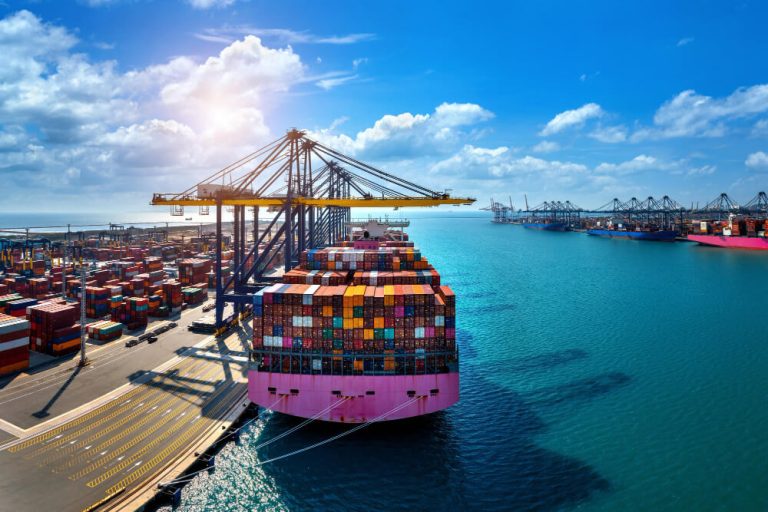
The shipping of commodities between France & India is imperative in the world environment. Uncertain weather may result in delays, particularly during the monsoons in India & the winters in Europe. It is necessary to keep weather forecasts so that disruptions are avoided.
Both countries have strict Customs requirements. Customs clearance should be done after proper documentation, such as Harmonized System Codes, Generalized System of Preferences. The Ports can be congested, as is the case with the ports of Le Havre and Marseille (France) and Mumbai/Chennai (India) during peak seasons.
Some of the late documentation, like commercial invoices and export licenses, could result in detention of the shipment and fines. In the case of valuable or sensitive goods, there should be quality packing and a safe shipping mode through which the goods will arrive on time and be protected.

The importer of record (IOR) service assures you that your consignments will likely comply with the U.S. import laws. We manage the documentation, duties, and taxes required to provide easy clearance of goods upon arrival at the US ports, particularly controlled goods such as electronic goods, healthcare equipment, and machinery.
The compliance of your goods with the French and U.S. rules and regulations will be achieved through the exporter of record services. We also manage export documentation, declarations, and export licensing of sensitive goods such as electronics products, machinery, and aviation parts as part of our export process. Clearing up the export process, we make sure that all paperwork is complete in this way.


The seller utilizes the Delivery Duty Paid service to pay all the shipping costs, duties, and taxes using the latter. It implies that the water in the USA shall not have to pay the surcharge at delivery. DDP is better suited to a high-value, time-sensitive consignment like electronics or machinery, where full transparency is attained, and there will be nothing to be surprised at
The Data Centre Solutions would provide the confidential delivery of data centre equipment, IT equipment, networking devices, and data storage systems. We offer climate-controlled shipping, live tracking, and compliance with international shipping regulations, which ensure your sensitive equipment will be properly taken care of so that it arrives at its destination safely and on time.

Shipping to India is possible based on either air or sea freight shipping out of France. Air forwarding will be faster, more costly, and suited to urgent deliveries. Conversely, sea freight is cheaper and relatively slower for large quantities of shipments.
India also imposes certain customs clearance requirements such as submission of a commercial invoice, packing list & certificates of origin. Missing customs regulations might imply delays or fines
Delivery Duty Paid (DDP) is the Incoterm critical to international shipping. In the case of DDP, the seller will cover all expenses, including shipping, duties, and taxes, so that the buyer in India will not incur extra costs after receiving goods.
There can be tariffs and taxes, depending on the character of the goods. The India Customs Department categorises goods into the Harmonized System (HS) Code, which is used to ascertain duties and taxes to be charged. Knowledge of these classifications prevents delays.
For expensive goods and shipments, it is strongly advised to purchase shipping insurance to cover these losses in case the goods get lost or spoiled in transit.
Most imports are recognized in the largest Indian ports of Mumbai, Chennai, & Kolkata. Port congestion can occur during high seasons, which could also be considered when planning your shipment.

The charges are determined by weight, size, & mode of shipping. Air freight is generally perceived to be more costly than sea freight, yet the delivery is faster.
The goods should be carefully packed to enable their safe travels. Special packaging materials and handling of the oversized packages/ delicate goods are required.
The temperature sensitivity of cargo will influence the mode of shipping you will adopt. When goods have a short time and are required as a priority, air freight would be ideal because it is fast and expensive compared to sea freight, where the goods are not time sensitive and are also cheaper.
Partially or inaccurately documented information will bring great delays. Ensure your paperwork is ready and available before shipping, that is, commercial invoices, packing lists & certificates of origin.
Looking at weather effects, particularly in a place like India, where there is a monsoon season that may cause shipping schedules to be delayed. Delays can be mitigated by following up on the weather forecast and an equally capable shipping partner.
The tariff relies on weight, size, and the nature of the goods. Air freight is faster and costly, and sea transport is cheaper but slower.
Necessary documents are a commercial invoice, packing list, certificate of origin, and HS code classification.
DDP implies that all costs incurred, such as shipping, duties, and taxes, are borne by the seller, and DDU implies that once delivered, the buyer should bear the costs.
Air transportation commonly occurs over 5 to 8 days, whereas sea transportation may require 30 to 42 days, based on the congestion in the port and shipping mode.
Yes, every shipment is monitored in real time, and you have a live update of your goods.