
1000+ companies now know their exact duty, VAT, and IOR costs before they ship, not when customs holds their cargo hostage. Join them.
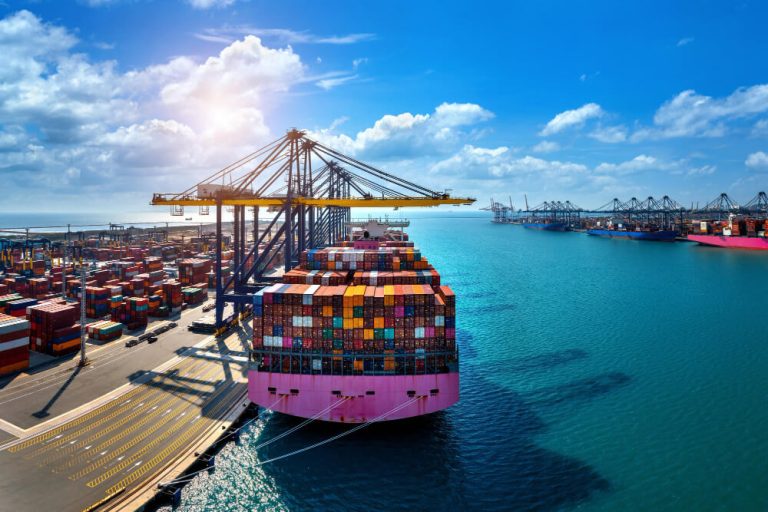
Trade relations between Mexico and the United States are strong and important, with Mexico being the United States’ second-largest trading partner and the United States being Mexico’s major export destination. Mexico and the US share one of the most strong trade relationships in North America, supported by busy ports, airports, and land shipping that manage millions of shipments yearly. Major maritime ports such as the Port of Veracruz and the Port of Manzanillo connect Mexican exports to major U.S. ports, such as the Port of Houston is an 80 km long area of the port, and the Port of Los Angeles is a major gateway for trade with Mexico. Land ports at Laredo are not just the U.S.’s inland port but also important for supply chains. El Paso and Nogales see the highest truck freight size, with strong freight forwarding networks confirming smooth flow. Mexico’s major airports, Mexico City International Airport and Guadalajara International, handle huge air cargo, specifically for IT, Aviation, Medical, and Automotive industries. These sectors depend heavily on accurate HS Codes, Harmonized System Codes, and HTS harmonized tariff classifications to move high-value goods effectively under favorable trade arrangements such as the generalized system of preferences.
The cheapest way to ship from Mexico to the USA is usually through economy international courier services or postal options. Standard (economy) shipping is more affordable than express because it uses consolidated transport and flexible delivery timelines. Choosing ground or economy air services can significantly reduce costs compared to premium options.

An Importer of Record manages all approvals, Incoterms, HS codes, duties, and documents, allowing companies to focus on core operations, mainly beneficial for IT hardware or medical devices, where regulatory precision is crucial.
An Exporter of Record ensures Mexican goods meet U.S. customs rules and export documentation standards, often working closely with reliable freight forwarding services.


DDP shipping, used for easy door-to-door delivery, confirms all customs duties and taxes are prepaid an effective option for those looking for the cheapest way to ship a package with no hidden fees.
Data center connectivity and infrastructure, mainly such as strong colocation services, cloud connectivity, managed services, high-level security, and dependable power and cooling, all designed to support digital change and smooth cross-border data exchange.

Trade between Mexico and the U.S. is fueled by booming sectors like IT, Aviation, Medical, and Automotive.
For IT, electronics components and hardware are high-volume exports. The U.S. imported over $77 billion in electronics from Mexico in recent years, mostly under accurate HS Codes and preferential trade rules.
The aviation industry regularly ships aircraft parts and avionics using specialized forwarders and freight forwarding networks that confirm approval with strong Incoterms.
Medical shipments include devices and surgical tools, where delivery duty paid (DDP) terms simplify clearances, keeping supply chains predictable.
Automotive parts account for some of the biggest volumes; for maintenance tools, auto parts, and vehicles worth over $100 billion flow north annually.
Using cheap international delivery options, well-managed DAP terms, and dependable forwarders helps industries improve the cheapest way to ship a package or bulk cargo while maintaining agreement with the HTS harmonized tariff.
If you’re moving IT hardware, aviation components, medical devices, or automotive parts, knowing Incoterms, using the generalized system of preferences, and securing the lowest shipping rates, confirm your shipments arrive on time, within budget, and fully compliant.

Cost Component Estimated Cost (USD) Product Packaging $50 – $200 per pallet Inland Trucking (Mexico) $100 – $350 per shipment
Export Documentation & Broker $50 – $100 Freight Forwarder Fee $100 – $300 Ocean Freight (20ft container) $1,200 – $2,000 Air Freight (per kg) $4 – $7.
Customs Clearance & Duties $100 – $400, Warehousing $50 – $150.
To find the cheapest way to mail a package or the cheapest way to send a package, businesses often compare providers for cheap international shipping, cheap UPS shipping, or cheap overseas shipping, and even consider the cheapest post office box options for returns.
Good forwarders help negotiate cheap international delivery and manage every cost element for efficient DDP or DAP terms.
The cheapest way is often through consolidated freight forwarding services using DDP or DAP terms. Comparing multiple providers helps you find the lowest rates for air or ocean freight.
Major maritime ports include the Port of Veracruz, Port of Manzanillo, and on the U.S. side, the Port of Houston and Port of Los Angeles. Land ports like Laredo, El Paso, and Nogales handle high truck volumes.
An IOR ensures your shipments comply with all U.S. import laws, manages HS Codes, duties, Incoterms, and keeps your shipments moving smoothly without regulatory delays.
Key industries include IT hardware, aviation parts, medical devices, and automotive parts, all of which require accurate customs classification and secure logistics networks.
Transit times vary by mode: trucking across the border can take 1–5 days, ocean freight about 7–14 days, and air freight as quickly as 1–3 days, depending on routes and customs clearance.