
1000+ companies now know their exact duty, VAT, and IOR costs before they ship, not when customs holds their cargo hostage. Join them.
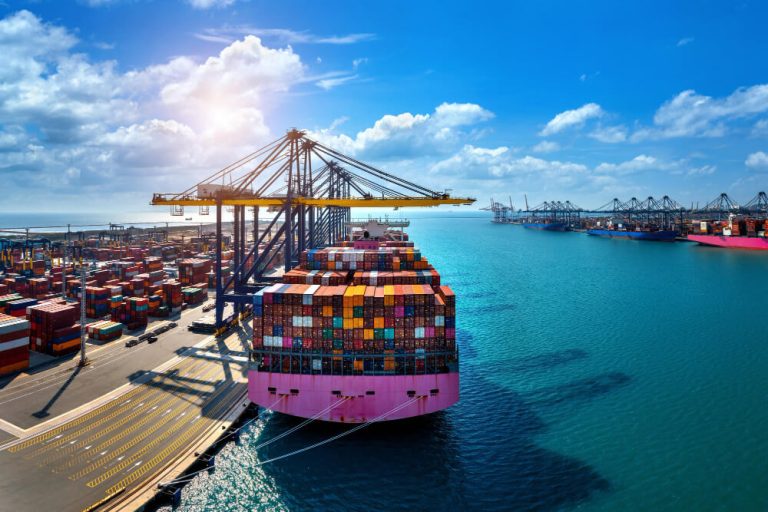
Argentina and the USA maintain strong trade relations, supported by well-connected logistics and infrastructure. Argentina’s main export hubs, such as the Port of Buenos Aires, Rosario, and Bahía Blanca, while Ezeiza International Airport works as the country’s biggest air cargo hub. The U.S. has the Port of Miami, Houston, New York/New Jersey, and airports such as JFK International, Los Angeles International, and Miami International play a major role in imports. Argentina is a huge exporter of automotive parts, medical equipment, aviation components, and IT hardware, with these sectors growing a large share of long-term trade. The automotive industry remains one of Argentina’s top exporters to the U.S., while the IT and medical sectors benefit from dependable freight forwarding services to meet growing demand. Aviation components also flow slowly, supported by harmonized system codes (HS Code) and simplified Incoterms that confirm smooth cross-border work.

An Importer of Record (IOR) service confirms that all customs duties, agreement with HTS harmonized tariff schedules, and documentation are managed in the U.S., minimizing risk for the buyer. We provide Importer of Record services for imports and exports in Argentina, with a deep knowledge of the country’s difficult laws for IT equipment.
Exporter of Record (EOR) service benefits Argentine suppliers by guaranteeing compliance with export regulations, proper classification under harmonized system codes, and accurate declaration of HS codes. One Union Solutions provides Exporter of Record services from over 170+ nations, including Argentina. They manage export agreements and manage all required documentation, allowing businesses to export without starting a local presence.


DDP shipping is frequently the most affordable and predictable solution. Under this Incoterm, logistics providers take all duties, tariffs, and taxes, helping exporters secure the lowest shipping rates without unwanted fees. This method is mainly attractive for organizations managing cheap overseas shipping or using services such as cheap UPS shipping for small goods.
Data center solutions are being combined with logistics systems to provide live shipment tracking, improved route selection, and increased security for sensitive industries such as IT and medical.

The cheapest way to send a package depends on shipment size, method, and service type. A mostly cost structure looks like this:
6–8 USD per kg through forwarders, frequently the cheapest way to mail a package quickly.
1,200–1,800 USD per 20ft shipment; 2,000–3,000 USD per 40ft shipment, depending on port usage.
35–60 USD for 1–2 kg goods, considered the cheapest post office box alternative for personal and Small companies.
Flat-rate pricing inclusive of duties/taxes, usually 15–25% above base freight fees, but providing greater savings long-term.
Costs depend on whether duties are prepaid or collected at delivery, providing flexible pricing for organizations improving their logistics strategy.
Selecting the right Incoterms and working with special freight forwarding services, we can unlock cheap international shipping options that balance dependability and affordability.

Argentina exports hardware and semiconductors to the U.S. trade. Using IOR/DDP services confirms agreement with U.S. import controls and lowers costs for tech organizations.
Aircraft parts frequently require cheap overseas shipping with strong regulatory clearance. Using proper HS codes reduces delays and confirms correct tariff payments.
medical devices depend on cheap international delivery with temperature-controlled logistics. Partnering with professional forwarders helps maintain agreement with the FDA and tariff regulations.
Automotive exports representing billions in trade, freight forwarding services under DAP or DDP shipping terms reduce risk and secure the cheapest way to ship a package across large supply chains.
If moving IT hardware, medical devices, aviation parts, or automotive goods, dependable freight forwarding organizations confirm predictable costs, transparent tariffs, and global connectivity.
The cheapest option often depends on shipment size. Small packages (1–2 kg) are cheapest through couriers, while bulk freight via ocean shipping offers the lowest per-unit cost. For businesses, DDP shipping provides predictable, all-inclusive pricing.
IOR services handle customs clearance, tariffs under the HTS Harmonized Tariff Schedule, and documentation on behalf of the importer, minimizing delays and reducing compliance risks.
DDP (Delivered Duty Paid) is often the most affordable, as all duties and taxes are included upfront. DAP/DAPS terms offer flexibility depending on whether the buyer or seller pays duties at delivery.
Key industries include IT hardware, aviation components, medical devices, and automotive parts. These sectors rely heavily on freight forwarding services, customs compliance, and predictable tariffs.
Air freight averages 6–8 USD per kg, making it the fastest option. Ocean freight ranges between 1,200–3,000 USD per container, offering the lowest bulk shipping rates.