
1000+ companies now know their exact duty, VAT, and IOR costs before they ship, not when customs holds their cargo hostage. Join them.
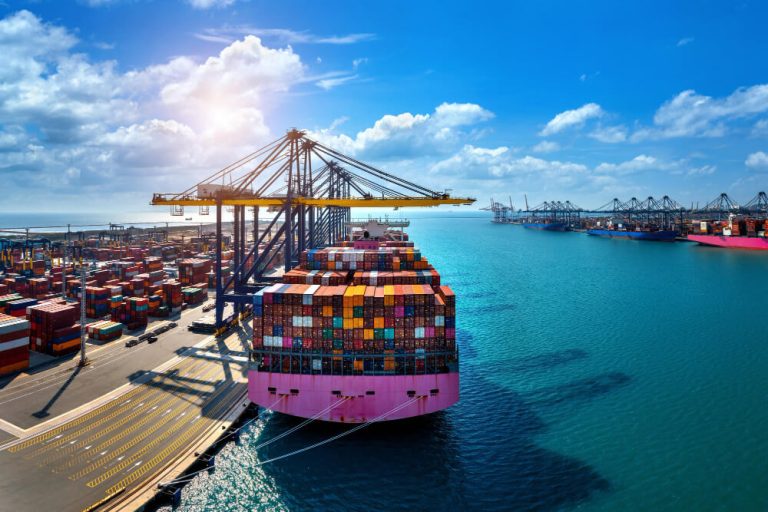
Japan and the United States share a strong bilateral trade relationship, with Japan ranking among the top exporters to the U.S. Major trade goods such as automotive tools, IT accessories, medical equipment, and aircraft parts. Major export centers in Japan, such as the Port of Yokohama, the Port of Kobe, and Tokyo Port, are used for sea freight. But Narita International Airport and Kansai International Airport manage large amounts of goods through air freight. On the U.S. side, major obtain ports such as the Port of Los Angeles, Port of Long Beach, and Port of Seattle manage inbound shipments, with airports such as Los Angeles International Airport and John F. Kennedy International Airport simplifying fast air cargo movement.
IT, aviation, medical, and automotive industries hugely depend on freight forwarding services to manage their supply chains. The harmonized system code (HS Code) is an important part of the categorization of goods during the export-import process, helping to use the U.S. HTS (Harmonized Tariff Schedule). Also, some goods from Japan qualify under the Generalized System of Preferences, which can lower import taxes into the U.S.

An IOR is the legal entity responsible for confirming that imported goods comply with all US customs regulations, paying duties and taxes, and providing accurate documentation.
An EOR is the entity legally responsible for confirming that goods leaving Japan follow Japanese export laws and all relevant global trade requirements. Handles all documentation and origin country clearance, reducing administrative burdens on the exporter.


DDP is an Incoterm under which the seller/exporter assumes all responsibility for delivering the goods to the buyer’s doorstep, including paying all shipping costs, insurance, duties, and taxe
When shipping IT hardware such as servers, networking equipment, or sensitive electronics, companies frequently use specialized logistics services that support data center infrastructure expansion or upgrades.

Use DAP or DDP Incoterms depending on how much control you want during delivery.
Always verify product classification under the harmonized system code for correct duty calculation.
Bundle shipments to benefit from cheap overseas shipping or the lowest freight rates.
Choose cheap international shipping options such as combined sea freight for bulk cargo.
Select dependable freight forwarding companies that provide both air and sea freight, with complete logistics support.
Research and compare the cheapest way to mail a package using rate comparison tools across freight forwarders and postal carriers.

Shipping from Japan to the USA mostly takes between 5 to 15 days through air freight and 20 to 40 days by sea freight, depending on service type and destination. The process begins with packaging at the origin, followed by logistics to a freight forwarding warehouse.
When the shipment arrives at the port or airport, the goods are loaded for shipment. Goods arrive in the U.S., cargo checks customs clearance, which includes conforming to exact HS codes, goods invoices, and Incoterms such as Delivered at Place or Delivery Duty Paid.
Customs brokers help simplify clearance, confirming agreements with import laws and calculating tax.
Costs for customs clearance mainly range between USD 100–500, depending on cargo type, size, and In case you use a customs broker or an all-inclusive freight forwarding service.
Using DAP or DDP shipping options can simplify the process of duties and taxes in the total shipping price.
Shipping takes 5–15 days via air freight and 20–40 days by sea, depending on service type and destination.
Japan: Port of Yokohama, Port of Kobe, Narita & Kansai Airports.
USA: Port of LA, Long Beach, Seattle, JFK & LAX Airports.
You need commercial invoices, packing lists, HS codes, and Incoterms. A customs broker can manage the approval documentation.
The cheapest option is usually sea freight (LCL) for bulk or local post services for small non-urgent packages.
DAP (Delivered at Place) and DDP (Delivery Duty Paid) are ideal for businesses that want simplified import handling and pricing.