
1000+ companies now know their exact duty, VAT, and IOR costs before they ship, not when customs holds their cargo hostage. Join them.
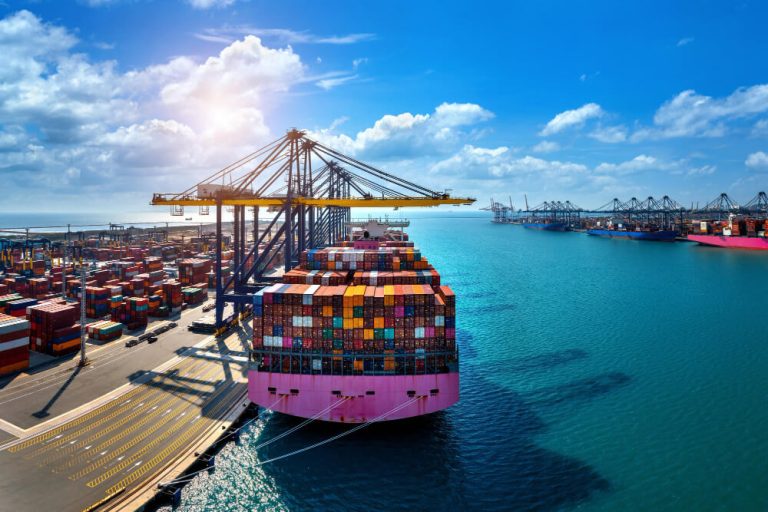
Trade between India and the United States has gradually increased in the last decade, and both nations have been placed in a position as significant partners in global trade. India mainly exports a variety of goods to the IT, aviation, medical, and motor vehicle industries. Last year, India’s exports to the USA were more than US$77 billion, with IT equipment, vehicle parts, and medical equipment.
Major Indian ports used for exports such as Jawaharlal Nehru Port in Mumbai, Chennai Port, Mundra Port, and Kolkata Port. Air Freight Side, Indira Gandhi International Airport, Chhatrapati Shivaji Maharaj International Airport, and Kemp Gauda International Airport work as the main export hubs. The American side, cargo mainly arrives at Port of New York and major ports of New Jersey, Los Angeles, Savanna and Houston, while major air cargo centers such as Chicago O’Hare airport handled approximately 11.3 million tons of air freight, Los Angeles International airport globally 9th busiest airport (2.49 million tons in 2022, +7.6%), and Miami International Airport nearly processed 3.036 million metric tonnes of cargo.

The IOR handles customs documentation, payment of duties/taxes, and confirms agreement with regulations like HS Codes, product certifications, and import licenses. The Importer of Record service provides benefits such as filing accurate customs declarations, paying import duties, taxes, and tariffs.
The EOR is the party responsible for confirming agreement with India’s export regulations. They manage export documentation, secure licenses, and confirm that goods legally leave the country.


DDP is an Incoterm where the seller takes responsibility for all costs and risks until the goods are delivered to the buyer’s door, such as shipping, export/import duties, and customs clearance.
In global trade, modern logistics companies use data centers to store, process, and secure massive volumes of supply chain data. The Data Center service offers benefits such as centralized storage for customs docs, HTS Codes, and trade data.

Transport cost from India to USA rely on various factors like weight, dimensions, type of cargo, mode of shipping, origin or destination, custom requirements & the Incoterms choose.
Air freight is usually more costly than sea freight but faster , or LCL is a good choice for smaller commercial shipments that don’t need a full container.
Delivery services can handle smaller, time-sensitive shipments. For larger or small urgent cargo, sea freight can be more economical.
DAP or DDP also affect the total cost because they determine which party managed import duties , taxes, & customs clearance.
Organizations should not just pick a transportation mode by looking at the lowest transportation rate.
They should compare freight charges with customs duties, taxes, handling fees, and other destination charges for accurate shipping estimate.

India’s IT industry exports a wide range of software products and services to the USA, supported by air hubs in Bengaluru, Hyderabad, and Pune.
The aviation industry exports engine parts, maintenance equipment, and safety gear. Bengaluru and Hyderabad serve as aviation manufacturing hubs, with shipments through Delhi or Chennai Airport.
In the medical sector, India is a major supplier of biotech goods, surgical tools, and diagnostic tools. These are shipped from Mumbai and Ahmedabad through sea and air, usually under the HTS harmonized tariff schedule for medical.
The automotive sector includes exports of spare parts, engine components, and even electric vehicle assemblies.
These mainly ship from Chennai, Pune, and Gujarat, going toward ports such as Port of Long Beach or Houston, using cheap international shipping methods such as combined sea freight or the cheapest way to mail a good, for small parts.
Shipping costs depend on shipment weight and dimensions, transport mode, origin and destination, cargo type, customs requirements, and the selected Incoterm. Duties, taxes, handling charges, and other destination costs may also affect the final amount.
Major Indian ports: JNPT Mumbai, Chennai, Mundra, Kolkata. Key airports: IGI Delhi, Mumbai, Bengaluru. U.S. hubs include New York, Los Angeles, Houston, and Chicago O’Hare.
DAP and DDP define who pays for duties, taxes, and shipping. DDP includes all costs for the seller, while DAP requires the buyer to handle import duties.
Transit time depends on the shipping method, route, carrier, shipment type, and customs processing. Air freight is generally faster, while sea freight usually takes longer but can be suitable for larger commercial shipments.
Customs brokers handle documentation, apply the correct HS or HTS codes, manage tax calculations, and ensure fast clearance at both ends of the trade route.